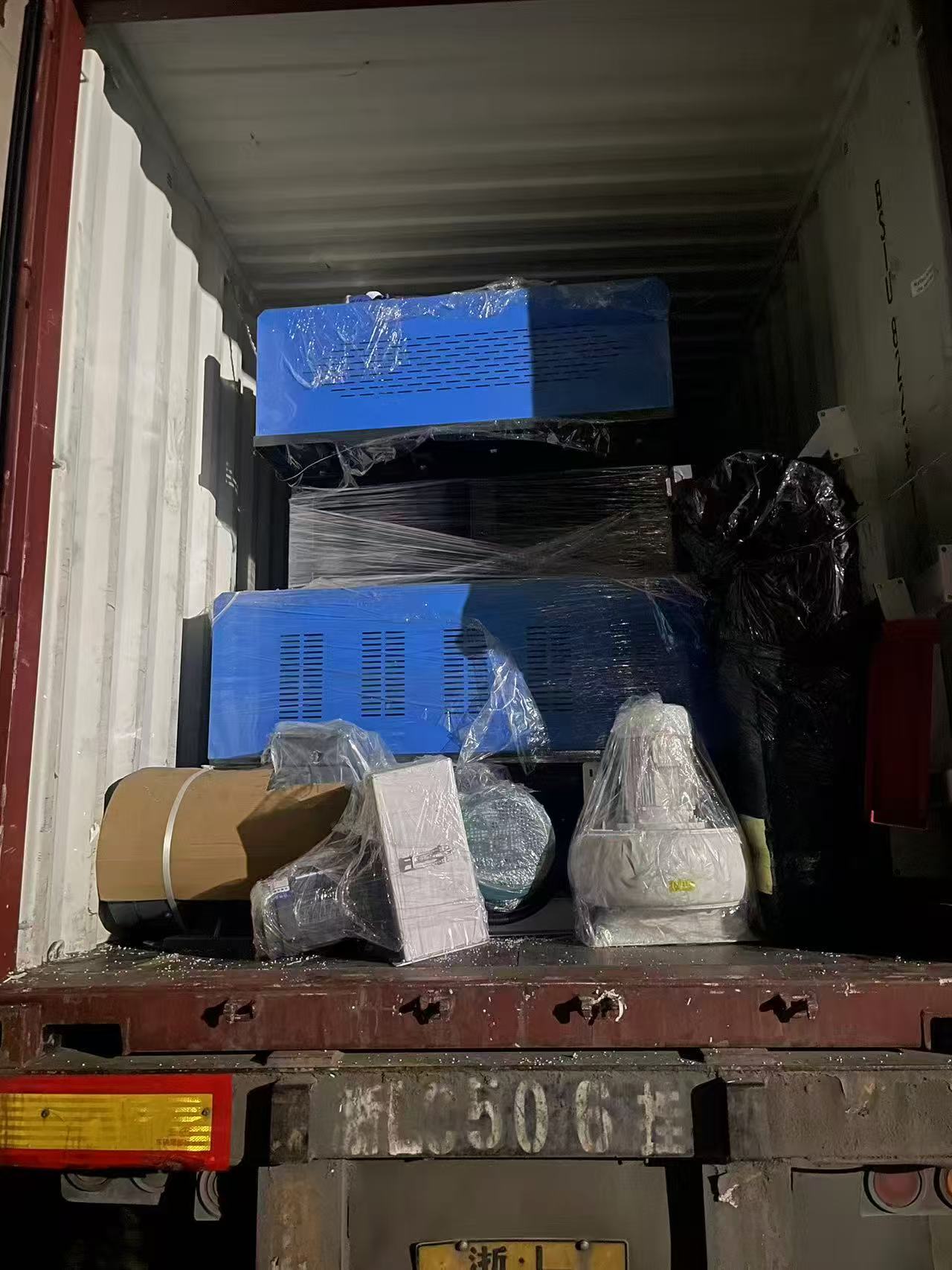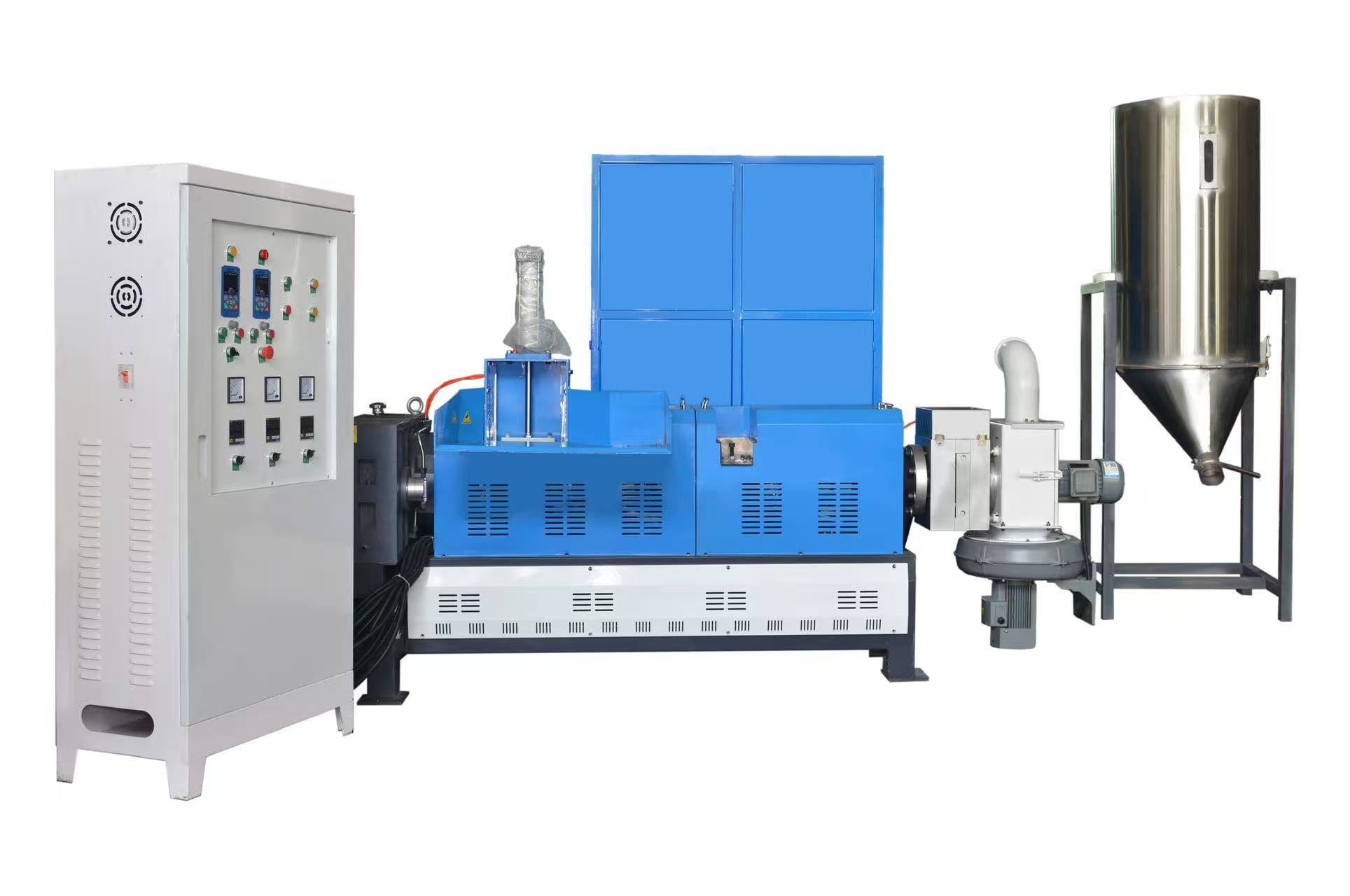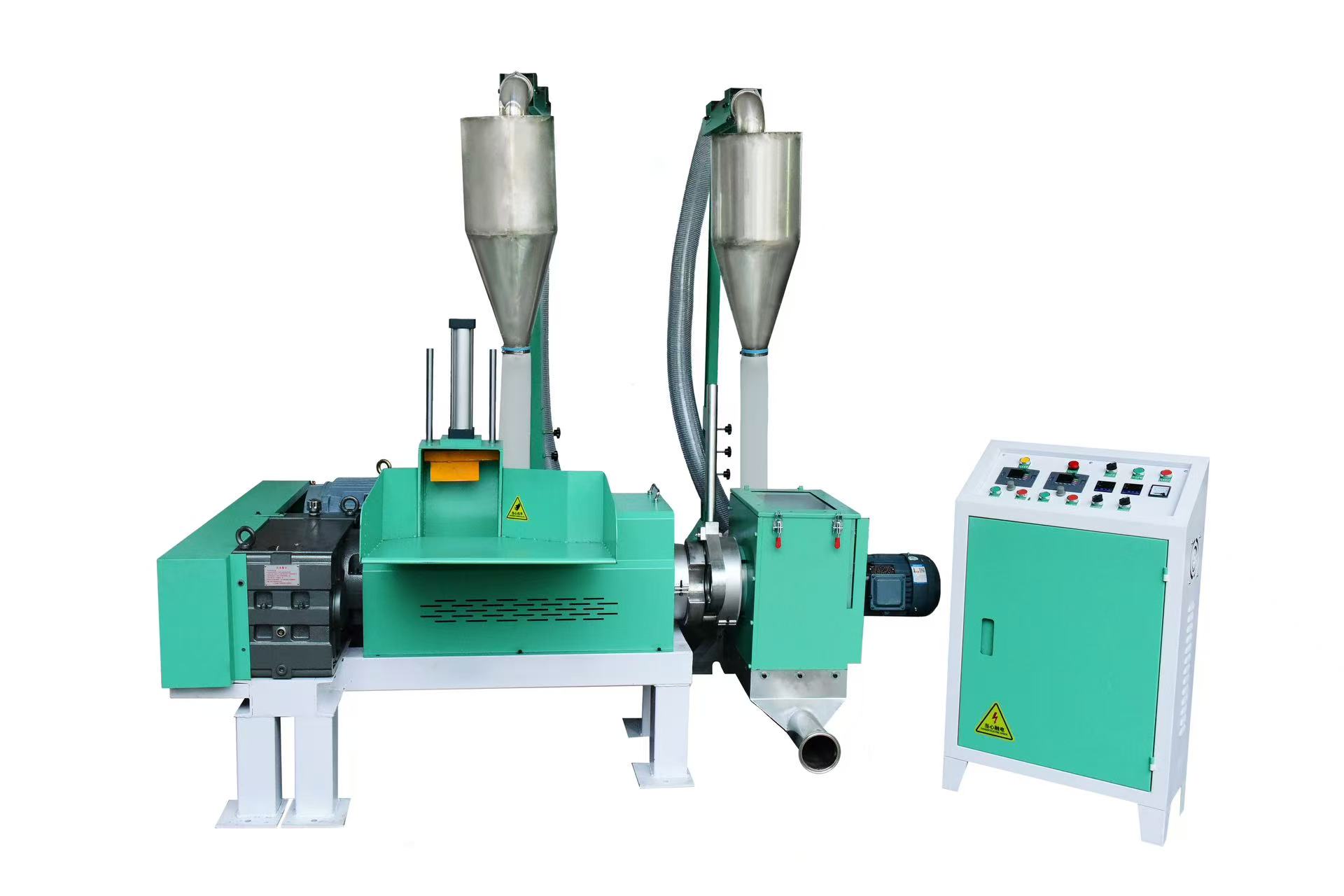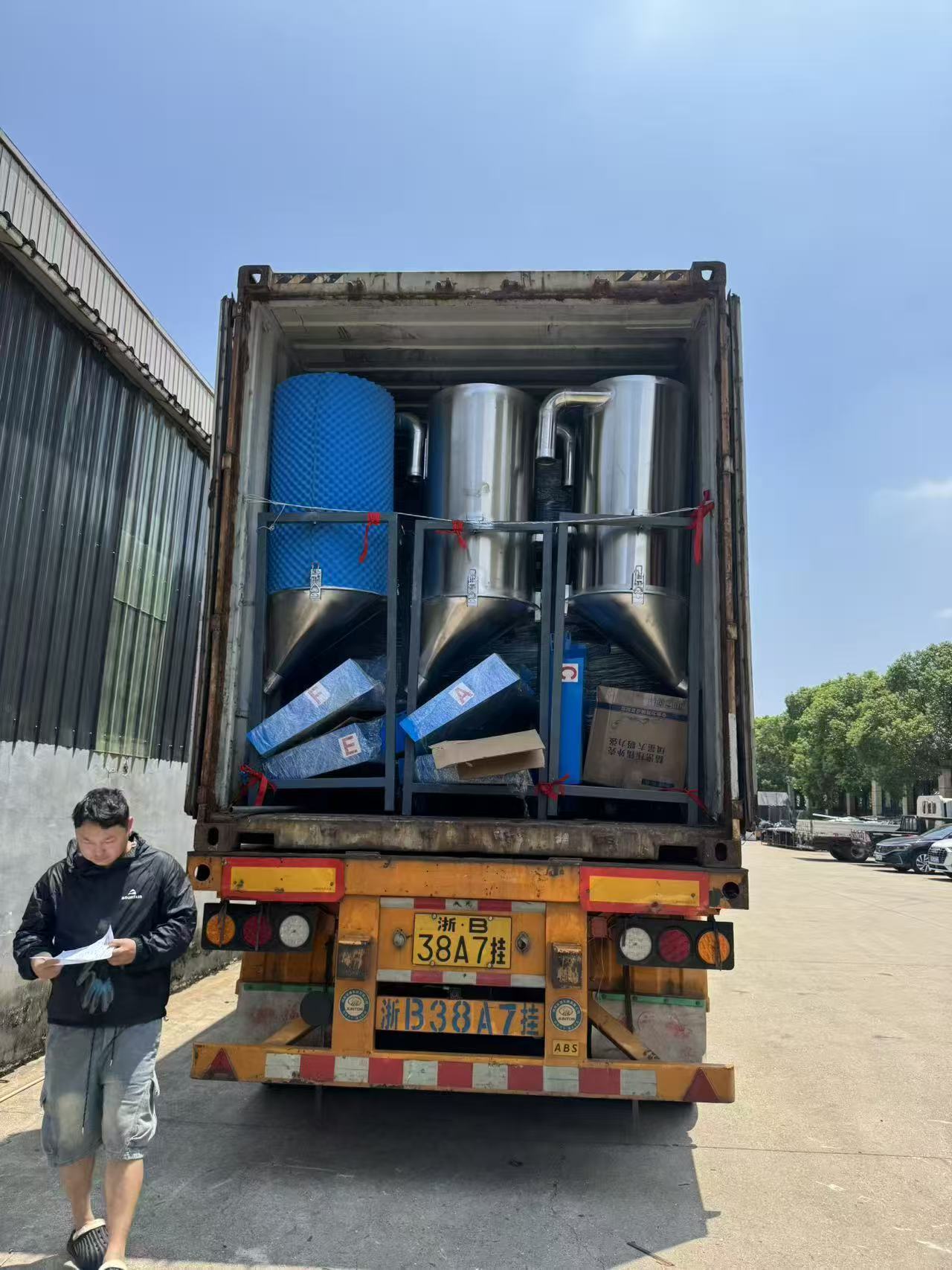
The air-cooled hot-face pelletizing machine comprises four core systems: the intelligent feeding and extrusion-melting system; the die-face cutting system; the pneumatic conveying and cyclone cooling system; and the storage and quantitative packaging system. **Intelligent Feeding and Extrusion-Melting System:** Utilizing a proprietary screw length-to-diameter (L/D) ratio and multi-zone temperature control modules, the system ensures uniform plasticization and stable extrusion of input black plastic strips and industrial scrap. **Die-Face Cutter:** High-precision rotary blades operate in close proximity to the die-head discharge holes; molten plastic is cut into tiny pellets by the high-speed rotating blades the instant it exits the die. **Pneumatic Conveying and Cyclone Cooling:** Freshly cut hot pellets are drawn by a powerful fan and come into full contact with high-speed cold air within the piping and cyclone separator, achieving rapid, water-free cooling. **Storage and Quantitative Packaging:** After cooling and centrifugal separation, the recycled pellets fall directly into the collection hopper, enabling clean, dust-free quantitative packaging into bulk bags (FIBCs) or standard bags. **1. Feeding and Melting/Plasticization Stage:** Operators feed bundled black waste plastic strips and industrial scrap directly into the inlet. The equipment features a high-torque gearbox and an optimized screw design capable of instantly gripping and compressing large chunks or continuous strips of waste material. The heating system employs multi-zone intelligent PID temperature control to ensure the polymer material melts uniformly within the optimal temperature range, preventing material degradation, yellowing, or odor caused by localized overheating. **2. Die-Face Cutting and High-Speed Air Conveying:** The molten plastic is forced into a specialized air-cooled pelletizing die-head. Discharge holes are evenly distributed around the circumference of the die face, and high-precision alloy cutters—driven by a variable-speed motor—rotate at high speed against the die face. The melt is cut immediately upon extrusion, instantly forming pellets. Unlike traditional strand-pulling processes, which are prone to strand breakage and tangling, die-face cutting eliminates the tedious manual tasks of strand threading and handling. **3. Cyclone Cooling and Packaging:** The freshly cut pellets remain at a high temperature; the pneumatic conveying system uses cold air to transport them at high speed into a stainless steel cyclone separator. The granules descend in a spiral motion within the cyclone chamber; during this process, heat is rapidly dissipated by the airflow, preventing the granules from sticking together. The cooled granules are round and plump, falling directly into the bulk bag (FIBC) below; the entire process requires no manual intervention, significantly reducing labor intensity. III. Core Competitive Advantages of the Air-Cooled Hot-Cut Granulator (Comparison): Air-Cooled Hot-Cut Granulation System vs. Traditional Water-Cooled Strand Granulation System. Water Usage: Zero water consumption throughout the process, with no water pollution or wastewater discharge (vs. requiring water tanks/troughs, consuming vast water resources, and necessitating wastewater treatment). Drying Energy Consumption: No drying stage required, significantly saving electricity (vs. requiring centrifugal dewatering machines and drying ducts, resulting in very high energy consumption). Footprint: Compact structure with vertical layout of the fan and centrifugal chamber, occupying minimal space (vs. water troughs and strand conveyors occupying a very long horizontal aisle). Waste Material Adaptability: Highly advantageous for soft plastics with low melt strength that are prone to strand breakage (vs. soft materials being prone to strand breakage, severely affecting continuous production). Granule Appearance: Round, plump granules with no burrs or residual moisture, and good flowability (vs. uneven cutting lengths, burrs at the ends, or trace moisture content). Industry Technical Perspective: Waterless granulation is not only a requirement for environmental compliance but also a key breakthrough for granulation plants to reduce costs and increase efficiency. Air-cooled hot-cut technology eliminates the need for water troughs and drying equipment, directly cutting production line electricity consumption by nearly 30%. IV. Quality Assessment of Recycled Granules and Downstream Application Prospects: As shown in the close-up footage at the end of the video, the black recycled granules produced by this air-cooled hot-cut granulator exhibit superior quality characteristics: Excellent Appearance: Granules are uniform, round-disc or microsphere-shaped, with consistent particle size and smooth, non-porous surfaces. No Water or Impurities: 100% internal dryness; granules can be fed directly into downstream production lines—such as film blowing, injection molding, or pipe extrusion—without secondary drying. High Color Quality and Uniformity: Black masterbatch/carbon black is distributed extremely evenly, resulting in excellent gloss, indicating thorough mixing and shearing within the barrel. These high-quality black recycled granules are suitable for a wide range of plastic product remanufacturing applications—such as impermeable membranes, agricultural irrigation piping, construction drainage pipes, plastic pallets, automotive injection-molded parts, and blown-film products like trash bags. They enable downstream manufacturers to significantly reduce the procurement costs of virgin resin, thereby achieving a win-win outcome that balances economic gains with environmental and social benefits.