In today’s rapidly evolving global industrial and packaging sectors, plastic products are ubiquitous. Consequently, the management of plastic waste has emerged as a critical challenge for manufacturing enterprises, packaging plants, and recycling facilities alike. Large volumes of plastic film, bags, and production offcuts consume significant storage space; disposing of them as ordinary waste not only squanders valuable resources but also incurs steep disposal costs. Meanwhile, traditional, outdated recycling methods often entail a host of persistent issues, including excessive smoke and dust, high levels of pollution, significant energy consumption, a heavy reliance on manual labor, and poor-quality output.
How can businesses reduce waste-handling costs—while remaining fully compliant with environmental regulations—and even transform this waste into high-value, reusable raw materials?
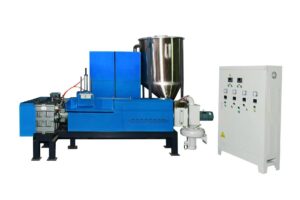
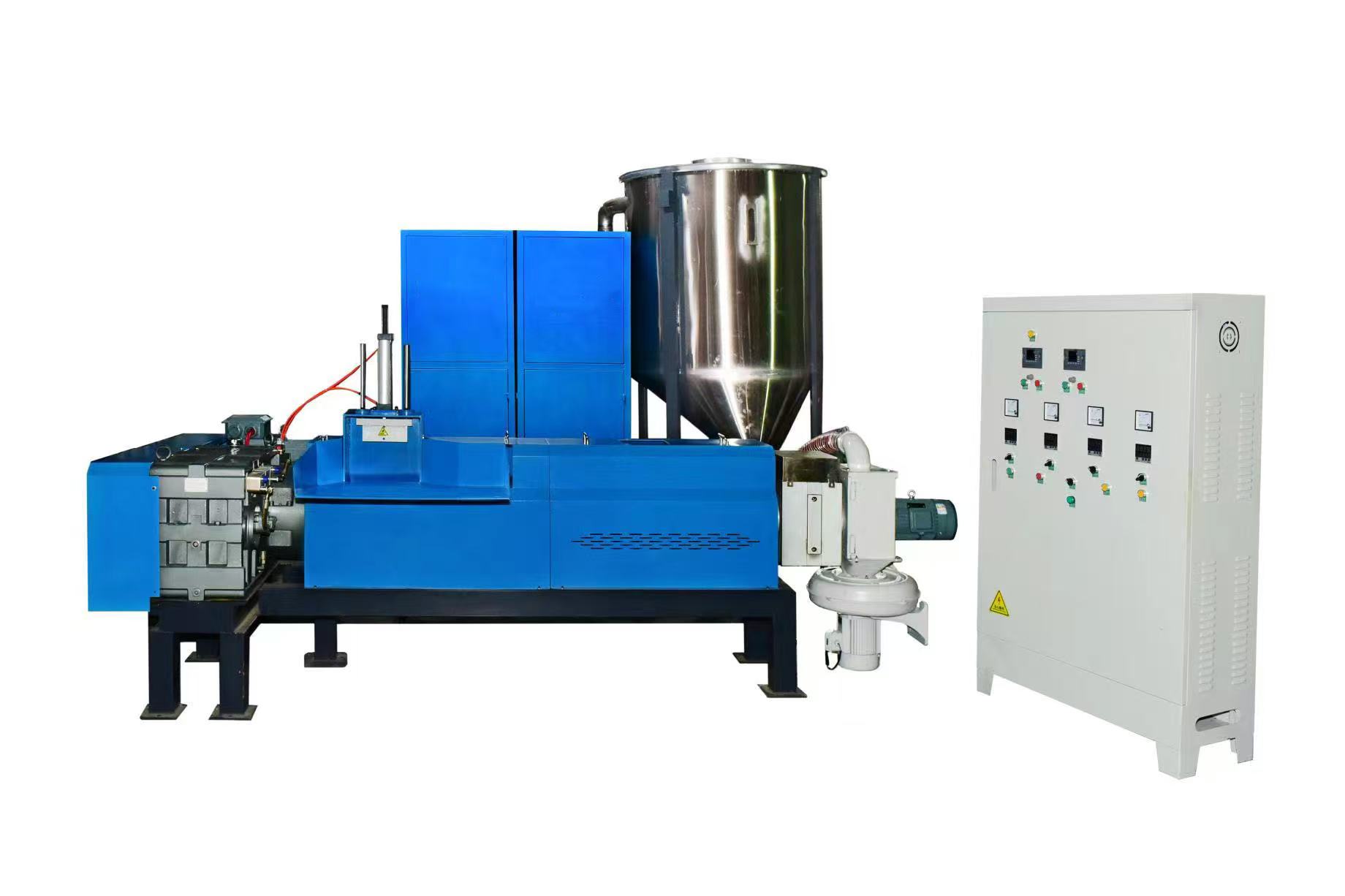
The solution lies in the high-efficiency, air-cooled, hot-cut plastic recycling and pelletizing integrated machine.
Powerful Feeding and Automated Conveying:
At the beginning of the video, a large volume of red plastic film, waste plastic bags, and yellow-white rolled film is continuously fed into the granulator’s intake. The machine boasts an exceptional throughput capacity; there is no need for tedious manual pre-cutting, as both rolled and bulky plastic films can be fed in directly and smoothly.
Intelligent Temperature Control and Precision Control Panel:
The camera shifts to the equipment’s intelligent control cabinet, where the panel clearly displays real-time temperatures for various heating zones (e.g., 222°C, 220°C, etc.). A series of high-precision digital temperature controllers, combined with an intuitive touchscreen and operation buttons, enable fully automated temperature regulation and parameter monitoring throughout the entire process—significantly lowering the skill threshold for operators.
Core Technology: High-Pressure-Resistant Die and Air-Cooled Hot-Cutting System:
The middle section of the video highlights the equipment’s core components: the “high-pressure-resistant die” and the “air-cooled hot-cutting” system. Once melted, the plastic is extruded uniformly through the high-pressure-resistant die, where rapidly rotating hot-cutting blades slice the molten material into precise, tiny pellets. The entire process utilizes air cooling, completely eliminating the wastewater pollution and the subsequent drying stages associated with traditional water-cooled granulation methods!
Automated Pelletizing and Finished Product Discharge:
Through an efficient pneumatic conveying system, the plastic pellets are rapidly transported into a blue collection bin. When an operator opens the discharge outlet at the bottom of the bin, the red plastic pellets—vibrant in color, uniform in size, and dense in texture—pour out smoothly like a waterfall! A handful of the finished pellets reveals a smooth surface, free of air pockets or impurities, making them perfectly suited for direct use in secondary injection molding, film blowing, or extrusion production!
🚀 Key Competitive Advantages: Why Choose Our Granulation Equipment?
1. Eco-friendly and Pollution-free: Easily Pass Environmental Inspections
Smokeless and Odorless: Utilizing advanced low-temperature, uniform melting technology, the system effectively prevents the plastic from overheating or scorching during extrusion, ensuring the production process is virtually free of unpleasant odors or heavy smoke. Zero Wastewater Generation (Air-Cooled Hot-Face Pelletizing): Traditional granulators require long water-cooling troughs, which occupy significant floor space and generate large volumes of polluted wastewater. This system utilizes an air-cooled hot-face pelletizing process, where pellets are cooled directly by air immediately after cutting. This eliminates wastewater discharge, making the process eco-friendly and compliant with the stringent environmental standards of various countries.
2. Time-Saving, Labor-Efficient, and Cost-Effective
Single-Operator Operation: The entire system features a high degree of automation. From feeding, melting, and extruding to pelletizing and bagging, the process can be managed by just one operator, significantly reducing labor costs.
Compact Footprint: The integrated, space-saving design eliminates the need for lengthy cooling troughs and drying blowers, substantially lowering factory rental costs.
3. High Throughput with Multiple Model Options (Tailored to Various Scales)
We offer a range of models to suit your specific production requirements, catering to small, medium, and large-scale processing facilities:
Model 75: 30–40 kg/h
Model 90: 40–60 kg/h
Model 95: 60–80 kg/h
Model 120 (with degassing and screen-changing system): 110–120 kg/h
Model 150 (with degassing and screen-changing system): 180–220 kg/h
Model 160 (with degassing and screen-changing system): 300–350 kg/h
4. Versatile Material Compatibility
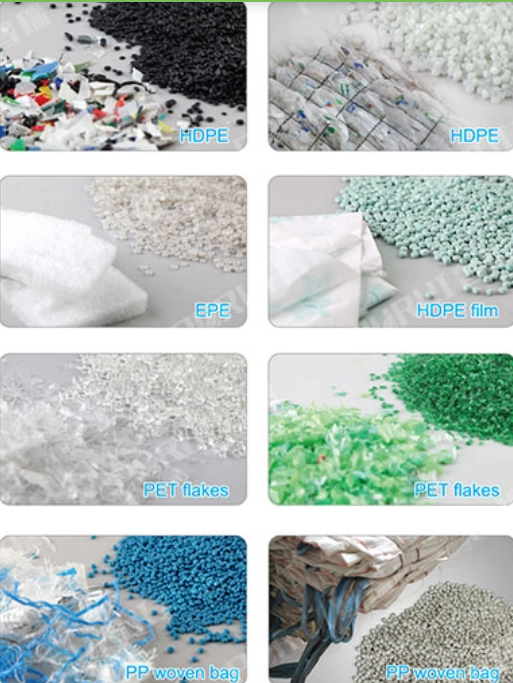
This equipment is highly adaptable to a wide variety of raw materials—including PE, PP, PVC, and EVA—as well as plastic films, bags, greenhouse films, courier bags, and industrial packaging scrap. It enables efficient recycling and repurposing, transforming waste materials into high-value recycled plastic pellets. 📈 Return on Investment Analysis: A One-Time Investment for Long-Term Gains
Purchasing granulation equipment is more than just an equipment acquisition—it is a high-yield business venture:
Cost Reduction for In-House Use: Instead of selling production waste at a low price, you can recycle it into pellets for reuse in your own manufacturing process, directly saving on the high costs of purchasing virgin raw materials!
External Recycling & Processing: Source waste plastic film at a low cost, process it into recycled pellets using our equipment, and sell these at a premium to injection molding or film-blowing facilities. With substantial profit margins, you can typically recover your initial investment within just a few months!
🤝 Contact us today for a personalized quote and a product demonstration!