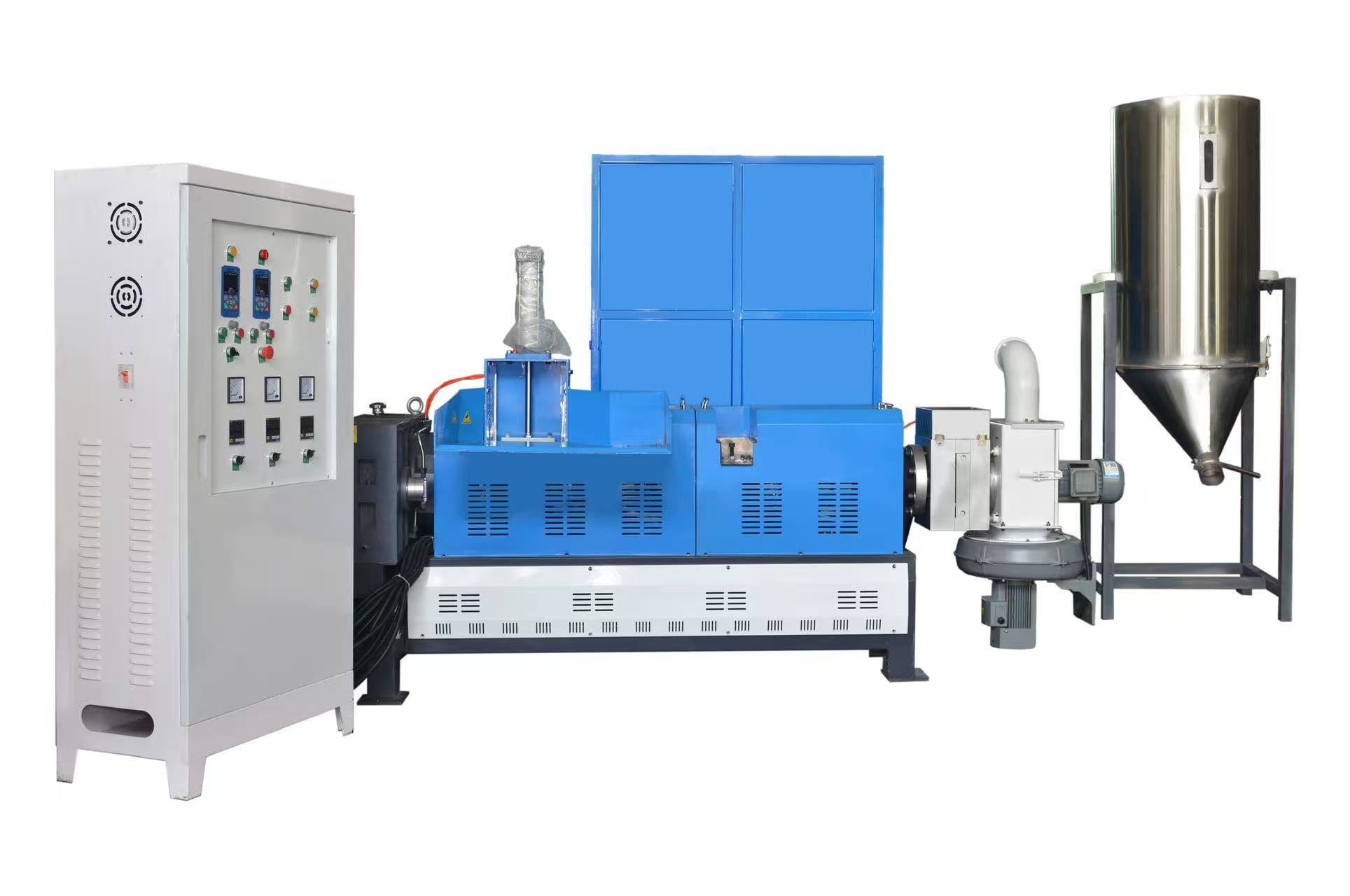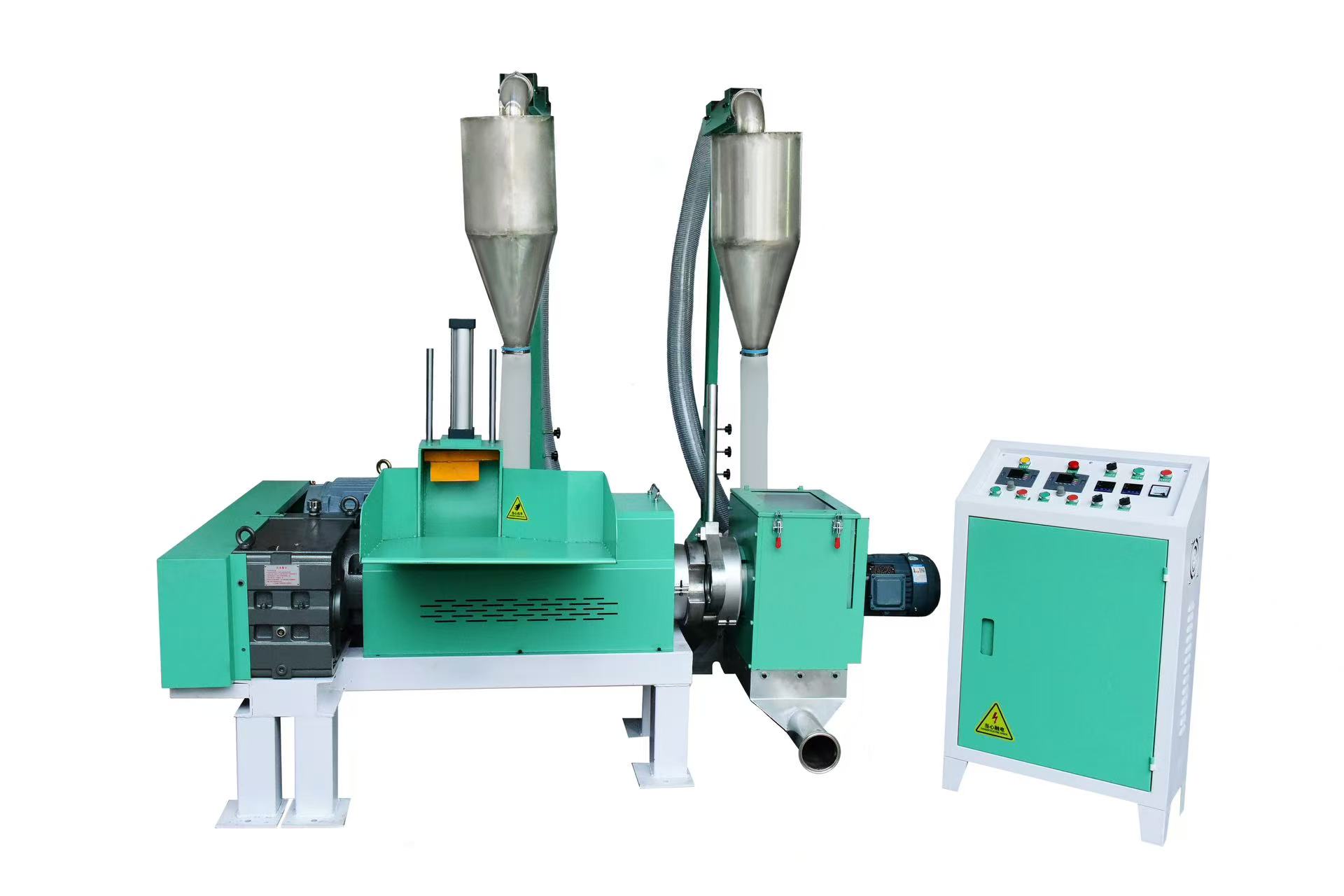
On-site view of the PVC pipe recycling and pelletizing machine. Main Control Cabinet: A standalone vertical electrical control cabinet located at the front-left of the unit. The panel integrates digital temperature controllers, ammeters, indicator lights, and control switches for precise monitoring and adjustment of heating zone temperatures and motor operating parameters.
Feeding and Extrusion Unit: The main assembly comprises a feed/compression mechanism, an extruder barrel with an optimized length-to-diameter (L/D) ratio, and external anti-scald guards and cooling air ducts.
Air-Cutter Pelletizing Head and Blower System: The discharge end connects directly to the air-cutting pelletizing chamber, drive motor, and high-power cooling/collection blower.
Finished Product Collection and Bagging Hopper: Connected via seamless piping to a downstream cyclone separator and stainless steel discharge hopper, with hooks provided below for collection bags.
1. Manual feeding of waste pipes
2. Screw-based melting, plasticization, and high-temperature extrusion
3. Die-face hot cutting (air-cutting) pelletizing
4. Pneumatic conveying and air cooling
5. Cyclone separation and bagging of finished pellets
6. Continuous, stable operation of the entire line
High-Efficiency Direct Feeding (No Pre-Crushing): Long, flexible pipes can be fed directly without pre-shredding, significantly streamlining the process while saving on equipment investment and energy consumption.
Air-Cutter and Air-Cooling Process: Utilizes air-cooled hot cutting for a water-free production process; the resulting pellets are dry and moisture-free, ready for immediate packaging or secondary processing.
Eco-Friendly and Energy-Efficient: The process generates no wastewater, and enclosed pneumatic conveying minimizes dust emissions, meeting modern environmental standards for industrial solid waste recycling.