In actual production, the most troublesome issues in a blown-film workshop include “bubble instability (fluttering), uneven film thickness, film breakage leading to downtime, and wrinkling during winding.” Frequent stoppages or an increase in trim waste not only reduce hourly output but also drive up raw material loss, place a heavier burden on manual inspection, and create scheduling bottlenecks for downstream processes such as bag making, printing, and slitting.
A well-designed and robustly assembled blown-film machine must demonstrate stability in several key areas:
Consistency in Material Feeding and Plasticization: Once raw materials enter the extrusion system from the hopper, smooth feeding, precise temperature zone control, and steady screw propulsion are essential to ensure a uniform and stable melt supply for the extrusion process.
Cooling, Stabilization, and Bubble Balance: After the material is extruded through the die and inflated into a bubble, the cooling air ring and the distribution of airflow directly influence the bubble’s roundness and cooling rate. A stable bubble shape is critical for ensuring consistent mechanical properties (in both transverse and machine directions) and a high-quality, smooth surface finish.
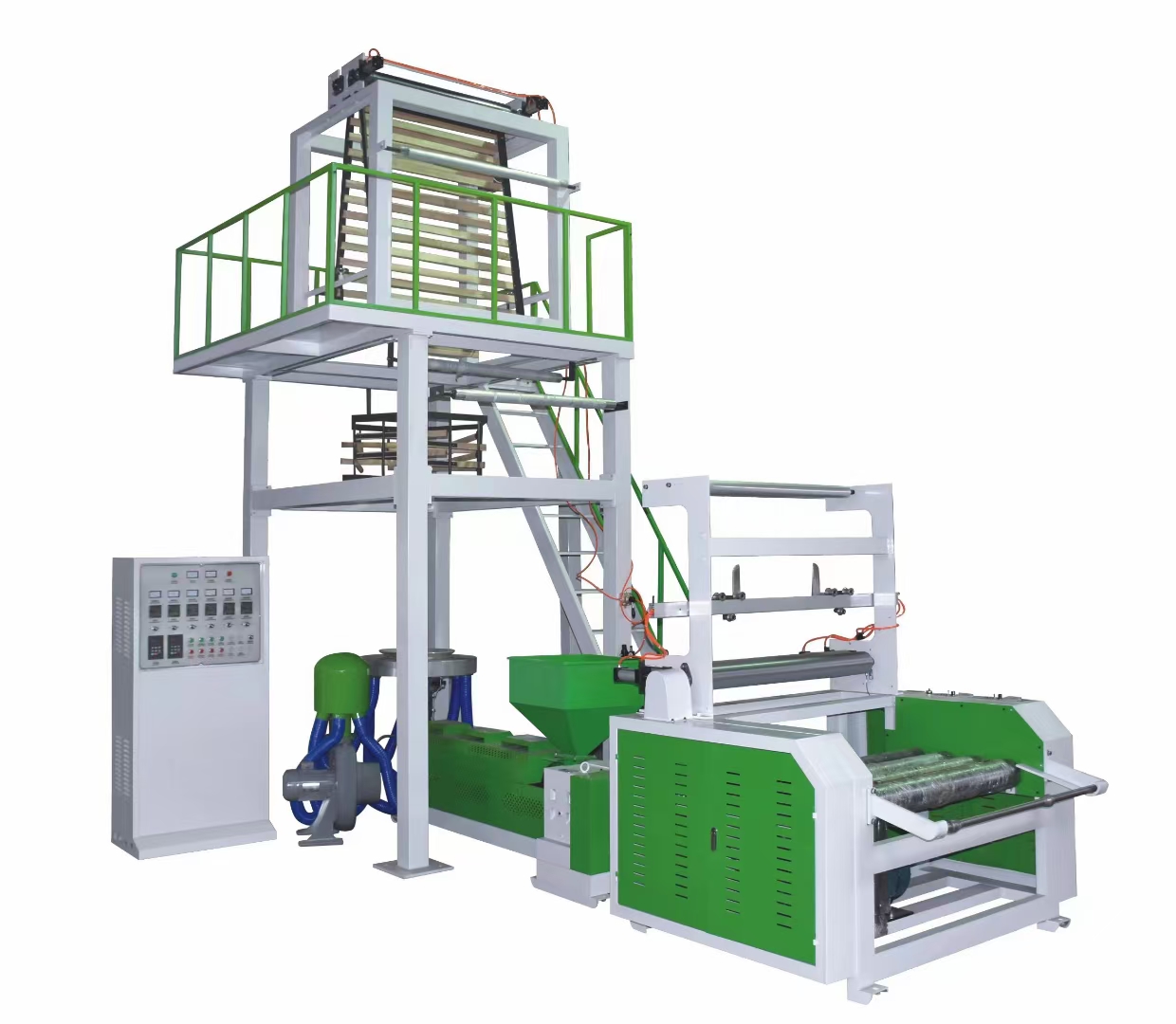
Overhead Haul-off and Winding Tension Control: After the bubble is collapsed by the collapsing frame (A-frame) and pulled upward to the overhead haul-off unit, it is guided downward to the winding mechanism. Given the significant span of this path, the machine frame must be highly rigid, the guide rollers must be perfectly parallel, and the haul-off and winding systems must operate in seamless coordination to prevent film deviation, stretching, or deformation.
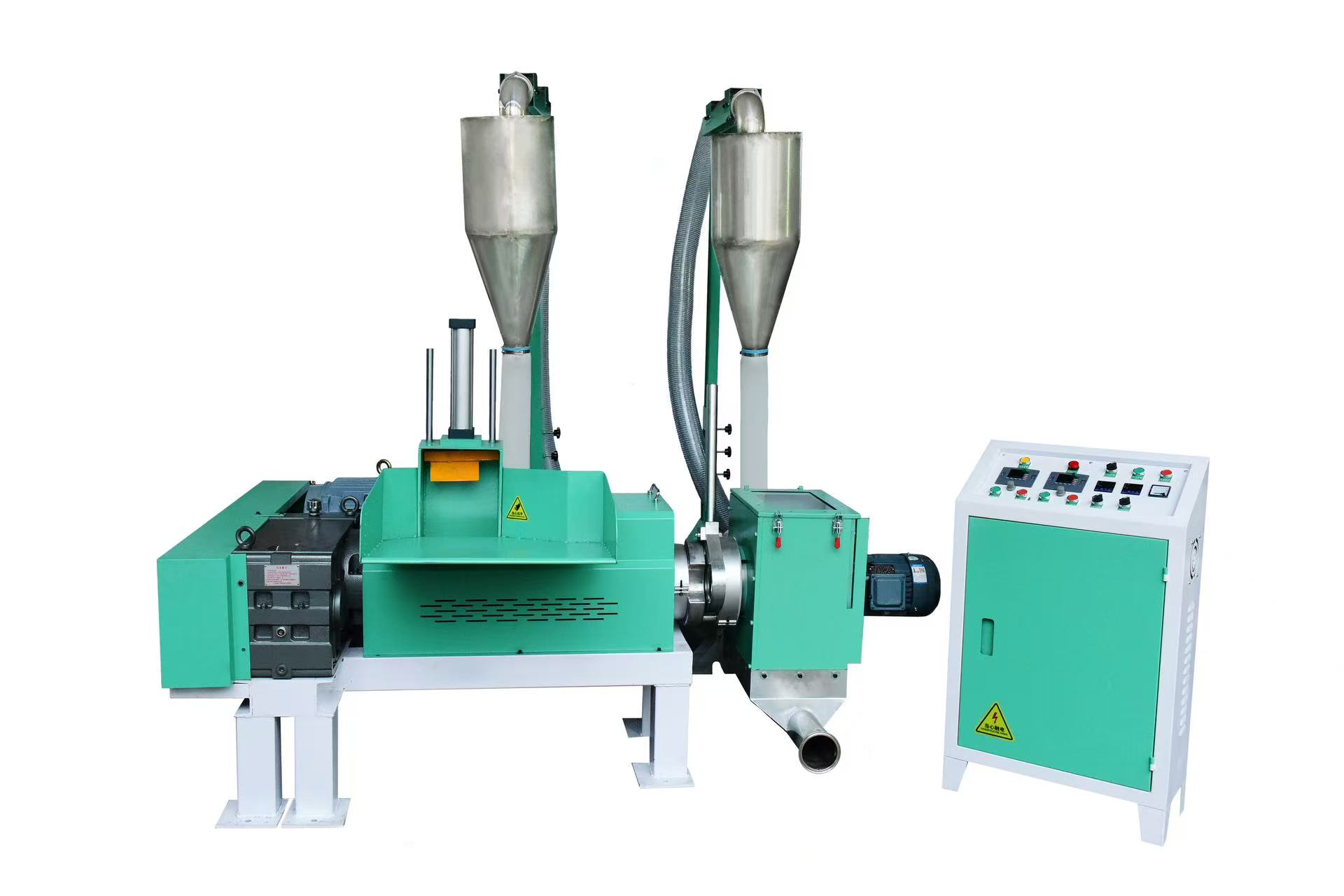
Modular and Scalable Manufacturing Capabilities: For clients planning bulk purchases or future capacity expansion, a manufacturer’s proficiency in frame fabrication, assembly testing, and parallel production—along with their ability to provide reliable lead times, long-term spare parts, and technical support—is crucial. Dual Hoppers and Suction Lines: As shown in the image, the hoppers—labeled “A” and “B”—along with components marked in yellow and green and transparent suction hoses, facilitate the efficient supply and switching of raw materials according to specific production recipes. Die Head and Red Air Duct/Air Ring Assembly: The die head area is equipped with blue structural components, a series of red flexible hoses, and a blower unit. These provide the necessary cooling airflow and air transport, ensuring that the inflated film bubble is cooled and stabilized effectively.
Multi-Zone Temperature Control Cabinet: Positioned next to the machine frame is a dedicated electrical control cabinet, featuring an array of digital temperature controllers and control switches. This multi-zone temperature control design allows operators to make precise adjustments to heating sections based on the specific characteristics of the raw materials and ambient temperature, thereby improving plasticization quality and operational clarity. Define Your Target Film Types and Specifications: Are you planning to produce standard packaging film, shopping bag film, stretch wrap, or film within specific width and thickness ranges? Different products require different extrusion specifications, die head sizes, cooling configurations, and haul-off/winding widths.
Verify Factory Ceiling Height and Power Supply Standards: Since blown film machines typically feature a tall haul-off tower and access platforms, it is essential to confirm the workshop’s clear height, available space for hoisting, and local industrial voltage and frequency standards before purchase to ensure smooth installation upon arrival.
Prioritize Ease of Operation and Maintenance: A well-organized layout for temperature controls and electrical components, logical access paths for maintenance, and the use of readily available, easily replaceable wear parts will translate into significant time savings during continuous daily production.
Leverage Machine Testing and Clear Communication: Before placing an order, align your process expectations through test-run videos, structural verification, and technical discussions—this helps minimize the “break-in” period when production begins. If you are looking for a blown film machine or planning a plastic film production line, please contact us for detailed machine specifications, configuration options, and price quotes. Simply let us know your intended film application, required width and thickness, projected production capacity, and the voltage standards of your country or region, and we will provide tailored recommendations for the most suitable equipment.