In the plastics processing and packaging manufacturing industry, the handling and recycling of waste film, production scraps, and defective bags have increasingly become a critical issue for companies seeking to reduce costs, improve efficiency, and ensure regulatory compliance. In the past, many small and medium-sized film producers, bag manufacturers, and packaging enterprises faced a dilemma regarding the daily accumulation of plastic waste and film scraps: selling them cheaply to scrap dealers meant a significant loss in potential profit, while investing in large-scale, water-cooled pelletizing lines was often impractical due to limited factory space, the difficulty of obtaining environmental permits for water circulation systems, complex operational requirements, and high initial capital expenditure.
Against this backdrop, a compact, air-cooled plastic pelletizing machine (a plastic recycling and regeneration unit)—specifically the “Model 90″—has stood out at industry trade shows. Its intuitive, high-efficiency performance not only drew the attention of numerous factory owners but also led to the establishment of new partnerships with distributors.
Through comprehensive video footage of the machine in operation on the factory floor, we can examine this “small but powerful” Model 90 air-cooled pelletizer across five key dimensions: feed design, extrusion and plasticization, die-face hot-cutting with air cooling, pneumatic conveying and storage, and overall system integration. This analysis reveals how the machine’s robust capabilities have won over both the market and business partners. Its water-free, eco-friendly air-cooling process eliminates the risks of water pollution and the need for complex infrastructure. Traditional water-cooled strand-pelletizing lines require cooling troughs, water pumps, and water treatment systems—all of which occupy significant floor space. Furthermore, the pellets must undergo a dewatering and drying process; if moisture is not strictly controlled, residual water inside the pellets can cause bubbles or “fish-eyes” (crystalline defects) in downstream applications like film blowing or injection molding. In contrast, the air-cooled hot-cutting process uses a high-speed airflow to instantly cool and solidify the molten pellets as they are cut at the die face. This method requires absolutely no cooling water, thereby avoiding environmental issues related to wastewater discharge while fundamentally preventing the problem of moisture-contaminated pellets. Compact, modular layout—easy to install even in small workshops
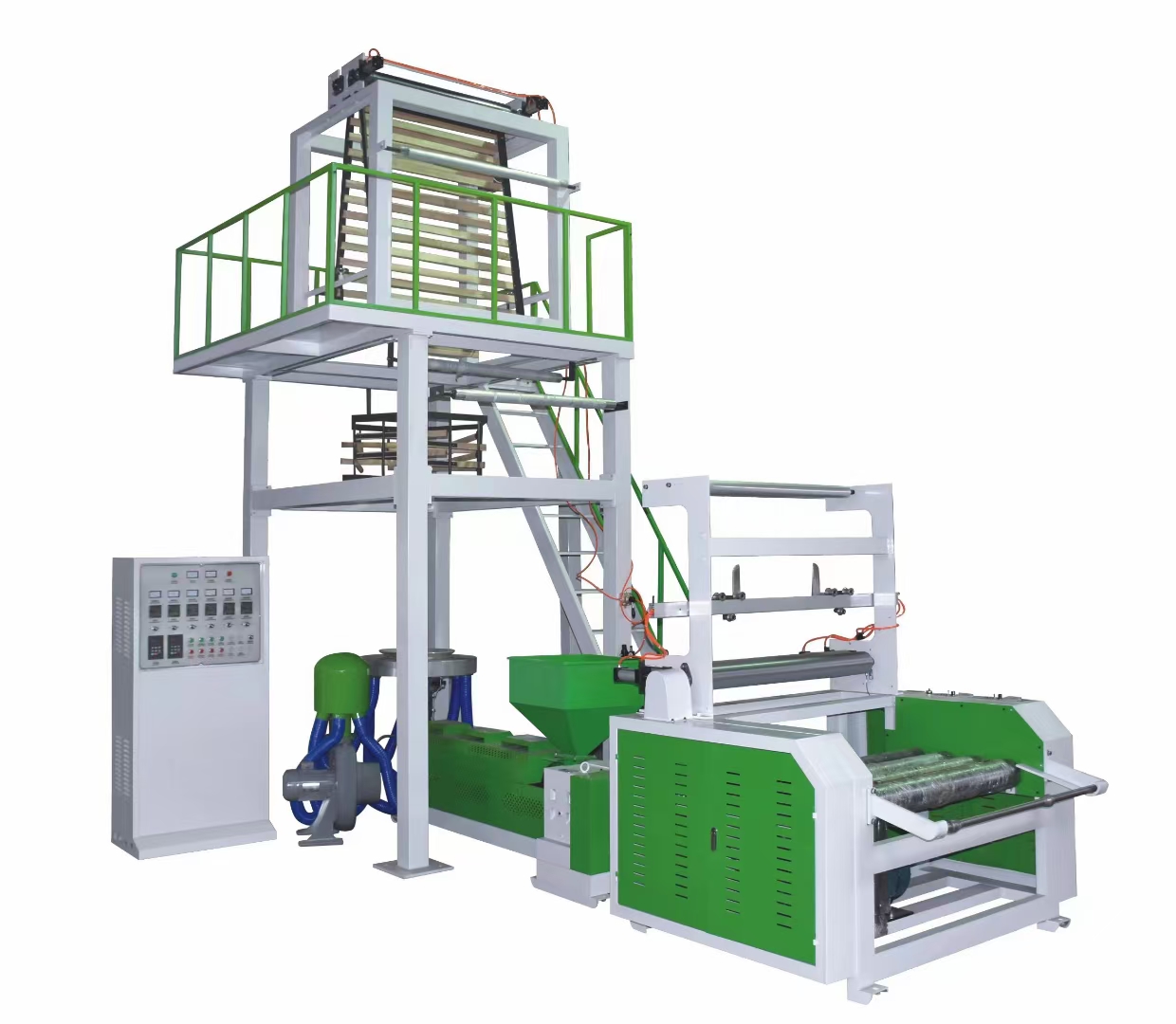
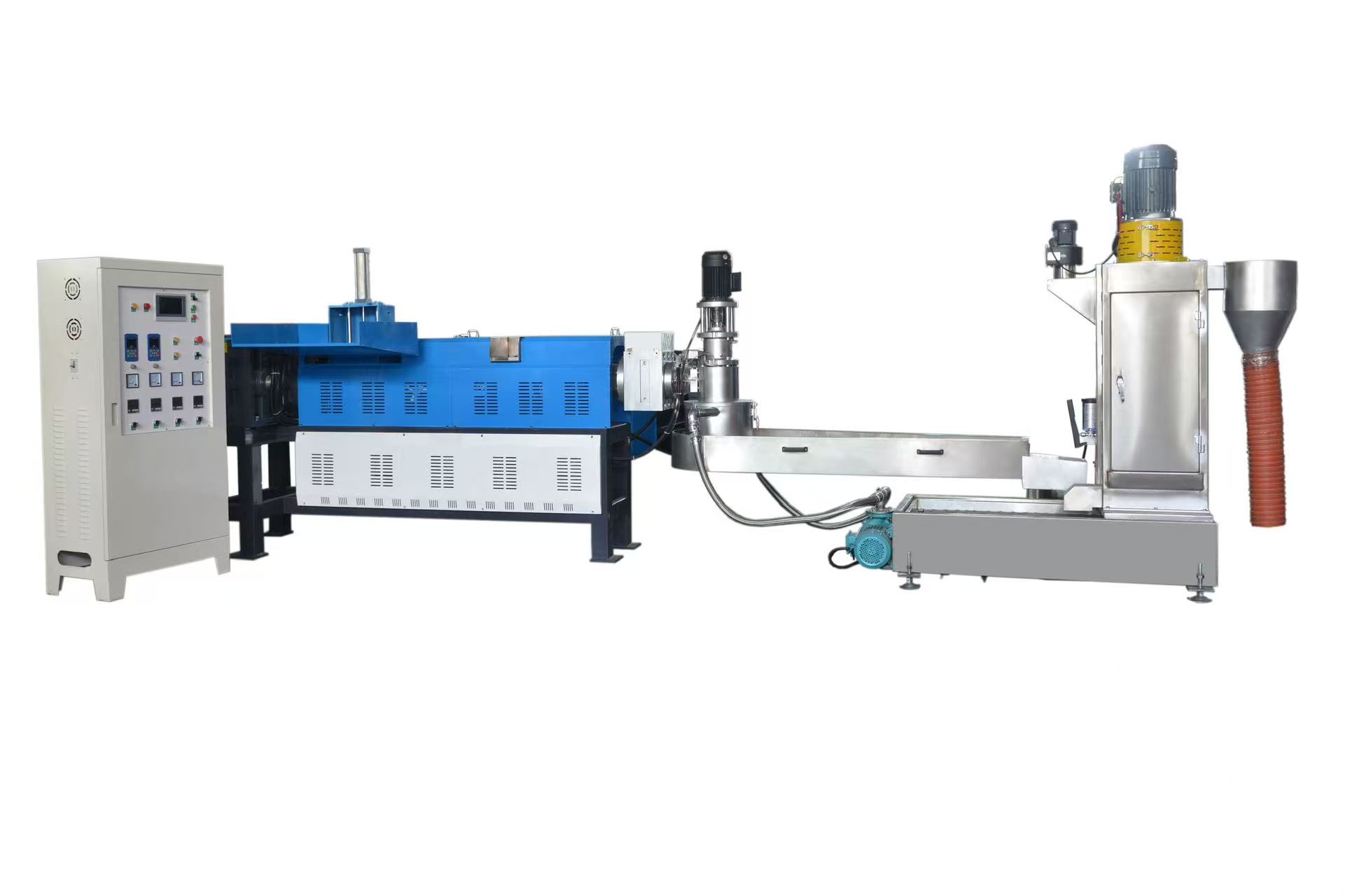
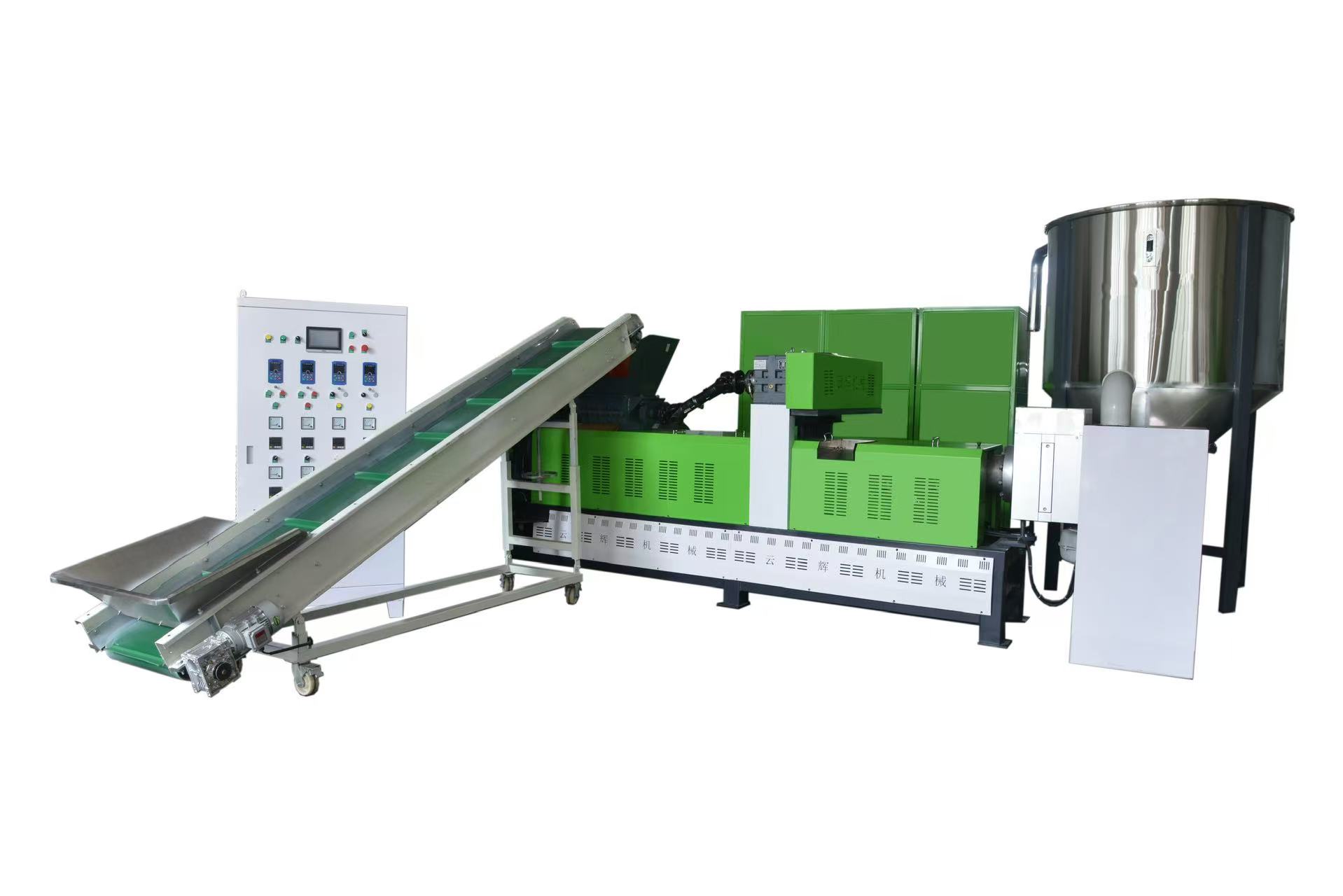
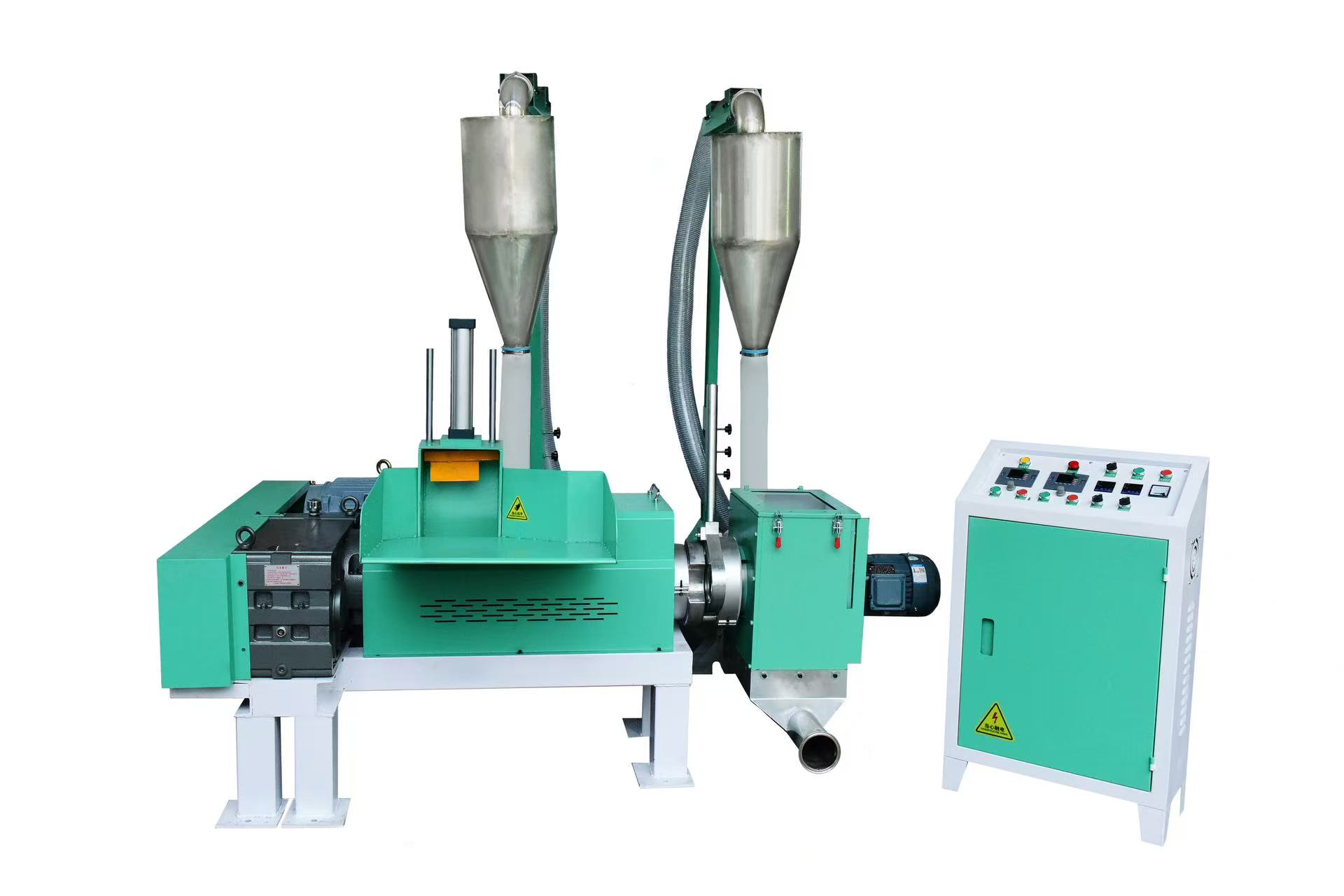
The Model 90 air-cooled pelletizing unit consists of an independent electrical control cabinet, a main extrusion unit, an air-cooled die-face pelletizing chamber, and a dual-unit stainless steel cyclone storage hopper. Each component is arranged logically with ample clearance, resulting in a highly space-efficient footprint. For film-blowing and bag-making facilities with limited floor space, the unit can even be positioned directly alongside existing production lines, enabling “on-site recycling of scrap—immediate reuse of pellets.”
Pneumatic feed-pressing system—no complex pre-processing required for bulky, loose film waste
When lightweight, bulky plastic bags or packaging films are fed into a standard hopper, they often cause “bridging” (clogging) or slippage, preventing the material from entering the screw. This machine features a wide, bright-yellow feed hopper equipped with an overhead pneumatic press. Operators simply place bundles of printed plastic bags into the feed chute; the pneumatic mechanism then applies steady downward pressure, continuously pushing the loose film into the screw-feeding zone—significantly reducing the physical labor required for manual feeding.
Uniform, high-quality pellets—ready for immediate reuse in film blowing and extrusion
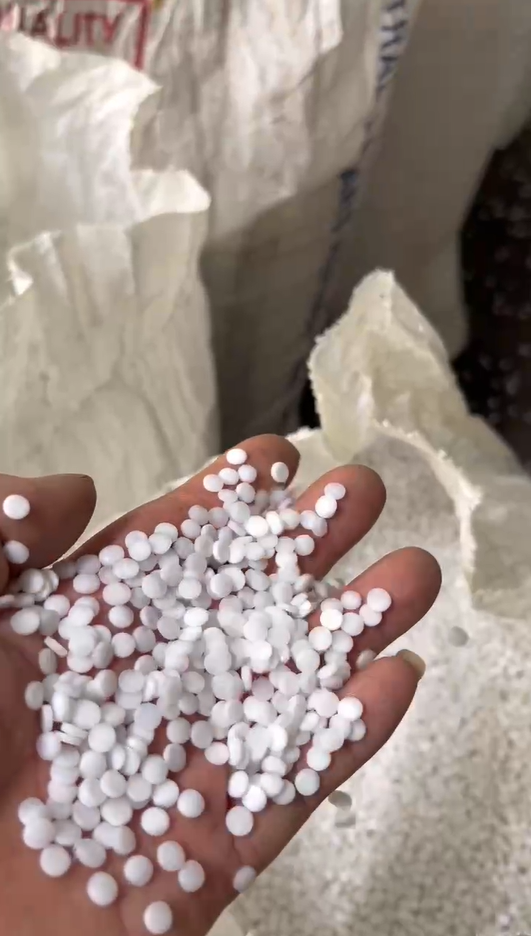
Regardless of how compact a machine may be, its true value lies in the quality of the finished pellets. Operators can collect the freshly cooled recycled plastic pellets directly from the red pneumatic discharge hose—they are round, uniform in size, and possess a natural color. They are dry to the touch, free from sticking, dust, or debris, and fully meet the standards for incorporating recycled material into the production of packaging films and other plastic products. Distinctive industrial design and integrated steel base—robust, durable, and highly visible
The machine features a striking color scheme—bright yellow and dark gray—complemented by a white electrical control cabinet and protective housing for the air-cooling system. This clear visual hierarchy ensures the equipment is easily identifiable within a modern, standardized industrial facility. The base is constructed with heavy-duty, thickened channel steel, which effectively absorbs vibrations from the high-speed screw and the pelletizing motor, ensuring the machine remains stable during continuous operation. Widened Feed Hopper + Vertical Pneumatic Pressing Device: Smooth, Jam-Free Feeding
The feed hopper features a wide-opening, sloped design with anti-spill baffles on both sides. Positioned directly above is a large-bore vertical pneumatic cylinder paired with a dual-guide-pillar system. As plastic bags—even those with color-printed designs—are fed into the hopper, a white pressing block, driven by the pneumatic cylinder, descends steadily. It applies uniform pressure to ensure the flexible film remains in tight contact with the feed screw, resulting in a smooth, continuous feeding process free from blockages or material backflow.
Independent Floor-Standing Intelligent Electrical Control Cabinet: Zoned Temperature Control with Intuitive Operation
To the left stands an independent, two-tone (white and yellow) electrical control cabinet. Its top panel is neatly arranged with an array of digital temperature controllers, ammeters, voltmeters, and start/stop controls. Visualized Die-Face Hot-Cutting and High-Speed Air-Cooling System: Total Control Over the Pelletizing Process
The pelletizing chamber is equipped with a transparent viewing window, allowing operators to clearly observe the high-speed rotating die-face cutter as it uniformly granulates the extruded molten material. Simultaneously, a powerful cooling fan generates a strong airflow that instantly sweeps the hot, freshly cut pellets away from the cutter head and into the air-cooling transport duct. This “cut-and-blow, instant-cooling” design effectively prevents pellets from sticking to the blades or clumping together, while also enabling operators to monitor blade contact and pellet uniformity without needing to open the chamber cover.
Cyclone-Separation Dual-Hopper Design: Enhanced Cooling and Continuous Bagging
The air-cooling duct conveys the cooled plastic pellets directly into a dual-unit stainless steel cyclone storage system, mounted on a yellow support frame. The cyclone separation structure not only dissipates residual heat from the granules and vents trace amounts of air, but also features a red corrugated discharge chute at the bottom, designed for direct bagging (a dual-bin configuration provides a buffer for continuous production, eliminating the need for downtime during bag changes). The primary reason this Model 90 air-cooled plastic granulator attracted new agents and secured partnerships immediately following the exhibition is its exceptional market versatility and commercial competitiveness:
Broad Customer Base: Potential buyers include virtually any manufacturing enterprise that generates scrap or defective film—such as plastic packaging films, vest-style carrier bags, roll-bag stock, agricultural films, or bubble wrap. Furthermore, the moderate investment threshold for the Model 90 ensures a short decision-making cycle for end-users.
Integrated Delivery and Simplified Setup: The core unit is fully assembled, wired, and tested with actual material before leaving the factory. Upon arrival at the customer’s site, it only requires connection to industrial power, an air supply, and ductwork to begin trial production—significantly easing the burden on local agents’ after-sales engineering teams.
Customizable Appearance and Voltage: The manufacturer offers mature, flexible production and delivery capabilities, allowing for machine color schemes tailored to a client’s corporate identity (VI), as well as compatibility with various international industrial voltage standards (220V, 380V, 415V, or 440V).
Building Trust Through Performance Footage: Every machine undergoes live material testing before shipment, with full video documentation provided. This offers agents concrete, authentic evidence of the equipment’s performance when presenting to end-users. Designed specifically for the efficient recycling of various soft thermoplastic films and packaging waste, this Model 90 air-cooled plastic granulator is ideal for:
LDPE / HDPE / LLDPE films: Including shopping bags, trash bags, flat bags, roll-bag stock, agricultural films, as well as scrap and purge material from blown-film production lines.
PP / BOPP Packaging materials: food packaging bags, transparent garment bags, scrap from printed composite films, and material from woven bags.
Closed-loop recycling of in-house production scrap: We help plastic manufacturing plants implement a “zero-waste-offsite” green circular production model, where scrap is re-pelletized on-site, effectively lowering costs.
Whether you are a plastic packaging manufacturer looking to reduce costs and increase efficiency, or a regional machinery distributor seeking high-value, high-repeat-purchase equipment:
Please feel free to contact us for detailed technical specifications, a full equipment configuration list, videos of the machine being tested at our factory, and our latest ex-works pricing for the Model 90 air-cooled plastic pelletizer. Simply let us know your raw material type, target hourly recycling capacity, and the voltage standard of your country—our engineering team will provide a tailored, one-on-one equipment selection plan and comprehensive technical support!