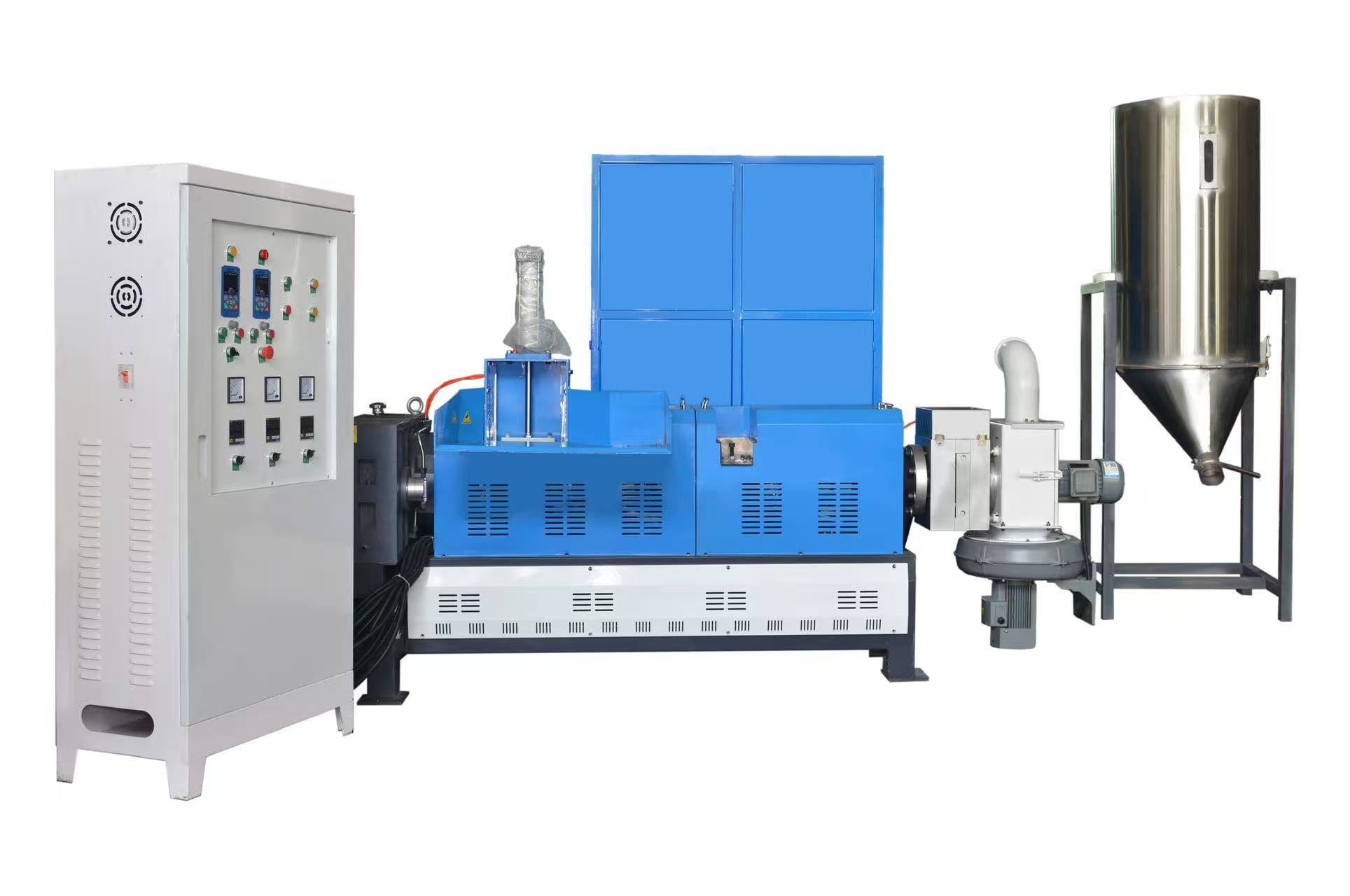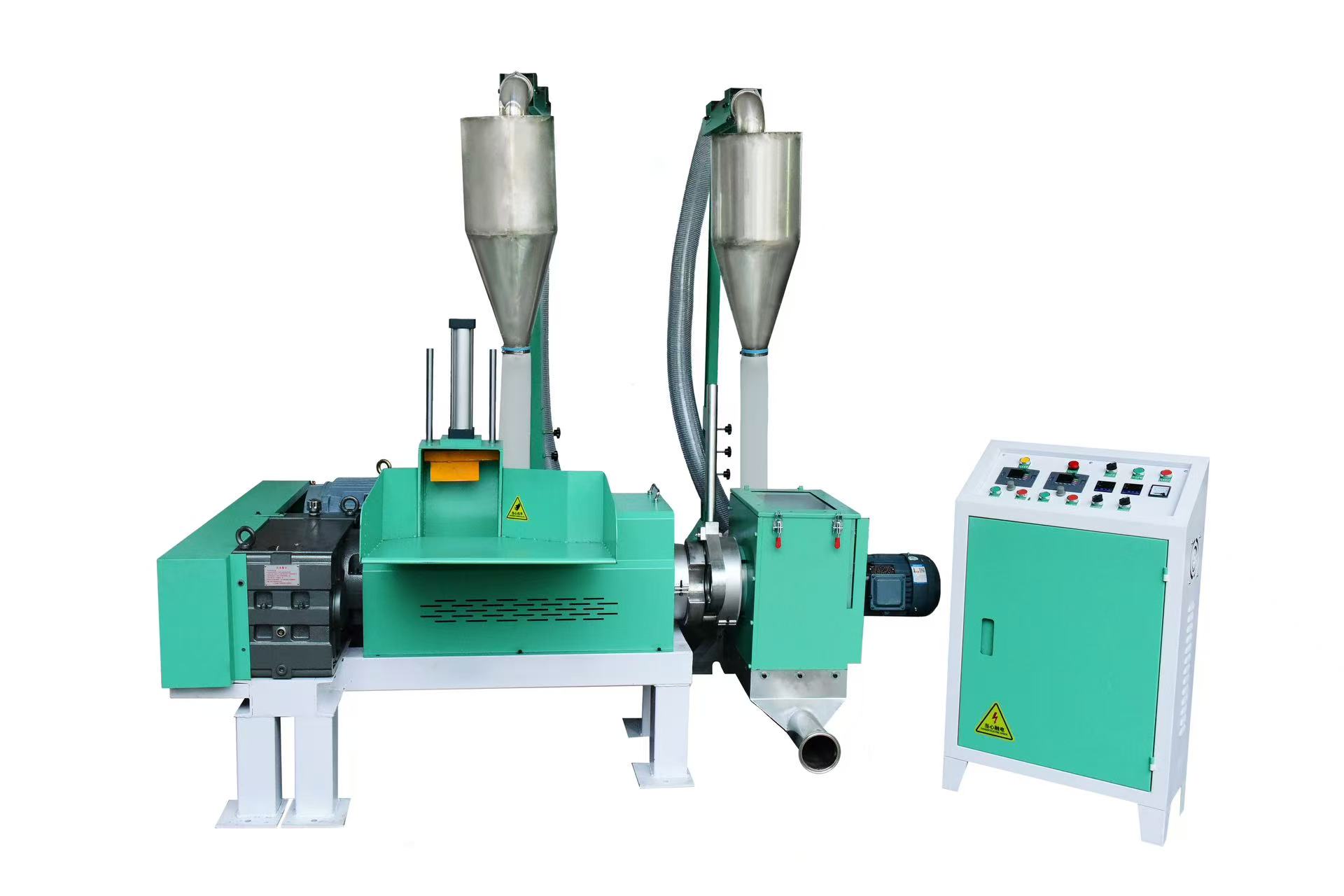
This Model 110 plastic granulation line, destined for the United States, embodies numerous mature and practical technological achievements developed by Yangcheng Machinery. Addressing common pain points encountered in waste plastic recycling—such as high impurity levels, low bulk density, and unstable moisture content—this system features a comprehensive modular design and targeted enhancements.
1. Main Extrusion and Plasticizing System (Core Power Unit)
The Model 110 main extruder is equipped with a high-strength alloy steel screw and barrel assembly. Subjected to deep nitriding and wear-resistant polishing treatments, this assembly offers a significantly extended service life, even when subjected to the high shear forces associated with processing high-impurity recycled materials. The barrel utilizes multi-segment ceramic heating rings, paired with an independent forced-air cooling system, to achieve precise dynamic temperature control within ±1°C. This prevents the thermal degradation of molecular chains in PP/PE materials caused by excessive shear or localized overheating, thereby maximizing the preservation of the recycled plastic’s physical strength.
2. Fully Automatic Hydraulic Non-Stop Screen Changer
At the die head section, the accompanying video clearly demonstrates a rapid screen-changing mechanism driven by hydraulic cylinders and a dedicated hydraulic pump station. This device enables screen replacement within just 0.5 seconds—hydraulically actuated and without interrupting production—effectively isolating micron-scale impurities, paper scraps, or residues of dissimilar plastics from the melt. This capability drastically reduces material waste and labor costs typically associated with frequent production shutdowns for manual screen changes.
3. Water-Ring Hot-Face Cutting and Precision Cooling System
A signature process of this granulation line, the water-ring hot-face cutting system represents a departure from outdated strand-pulling and cold-cutting methods. The moment the molten plastic extrudes from the die face, it is precisely severed by high-speed rotating alloy blades (the blade speed is dynamically adjusted via a variable frequency drive to match the extrusion output). Immediately thereafter, a surrounding high-velocity circulating water ring envelops and instantly cools the newly formed pellets; the water flow then carries the pellets into a stainless steel chute. The entire system occupies an extremely compact footprint—saving over 60% of the floor space typically required by traditional strand-pulling granulation lines. 4. High-Power Vertical Centrifugal Dewatering and Pneumatic Conveying System
Upon entering the high-speed vertical centrifuge, water-laden granules are subjected to powerful centrifugal forces generated by rapid rotation, effectively spinning off the moisture. The expelled water flows through a lower filtration screen and returns to the sedimentation and circulation tank. Guided by a powerful blower located at the top of the unit, the dried granules are pneumatically conveyed—via abrasion-resistant, all-stainless-steel ductwork—directly into a stainless-steel collection bin or large-capacity bulk bags (ton bags). This system ensures a fully enclosed, dust-free, and continuous clean production process.
IV. “Robust Packaging” and Secure Delivery Meeting International Maritime Transport Standards
Transoceanic shipping is often characterized by extended transit times and exposure to harsh marine environments involving high-salinity salt mist. For industrial equipment destined for the United States, Yangcheng Machinery strictly adheres to the highest international standards for delivery packaging:
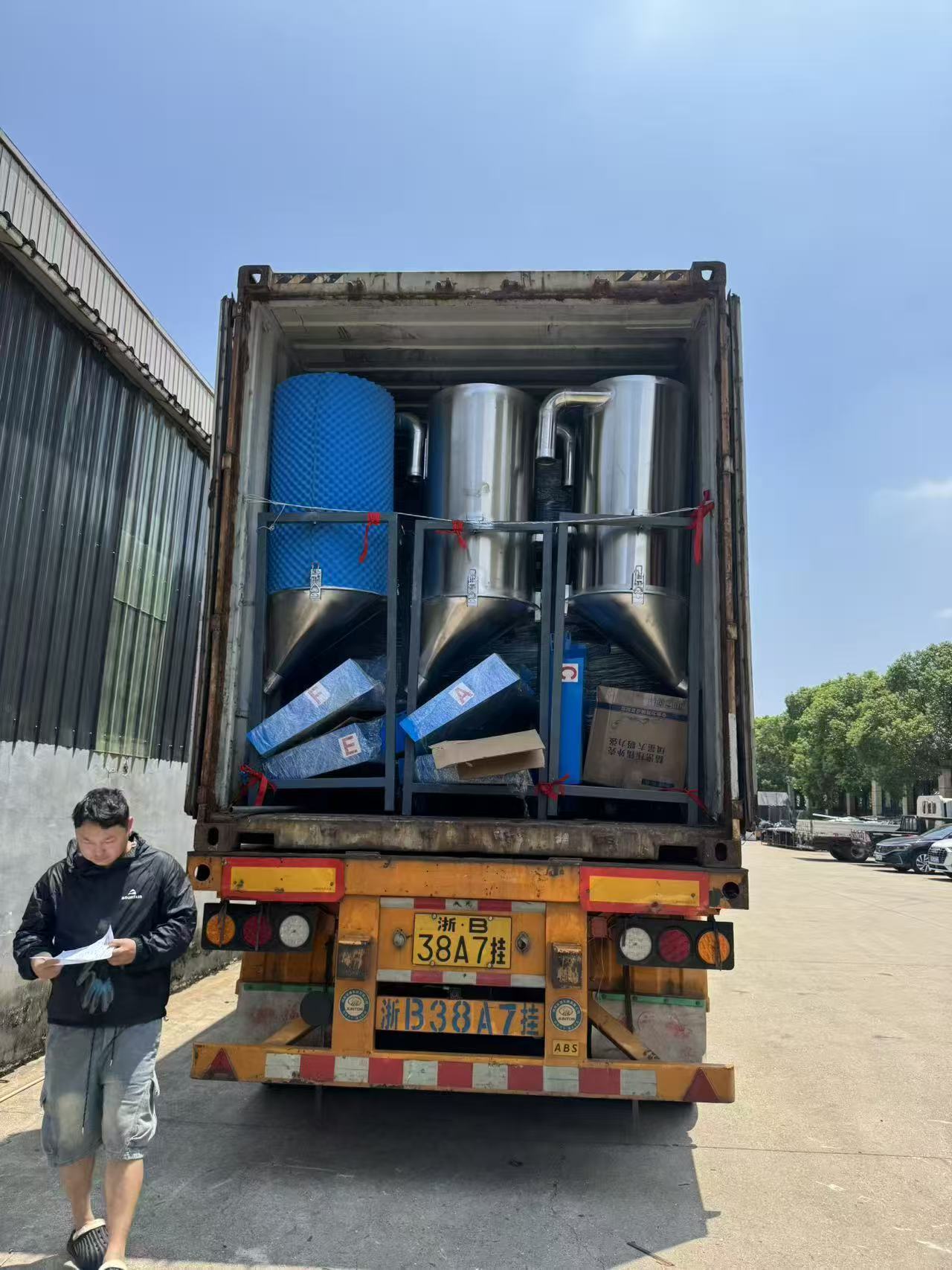
Multi-Layer Moisture-Proof Wrapping: The entire machinery unit is fully enclosed and wrapped with a minimum of six layers of thickened, industrial-grade PE stretch film. Industrial-grade desiccants are strategically placed at critical joints and interfaces to provide maximum protection. This rigorous measure effectively prevents moisture and high-concentration salt mist—inherent risks during sea transit—from corroding precision components, electric motors, and control cabinets.
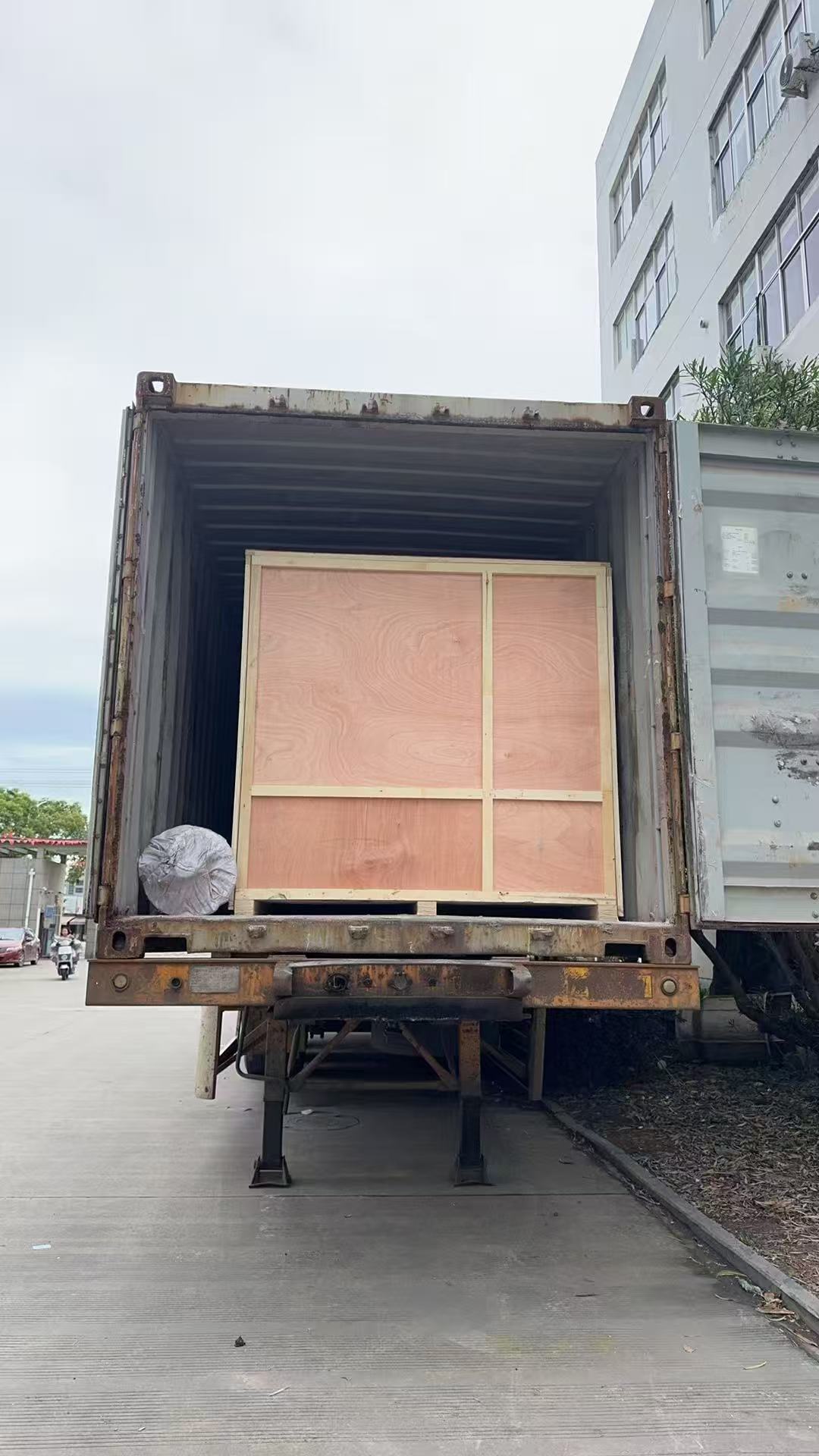
Heavy-Duty Solid Wood Crating with Structural Framing: The equipment is secured within a robust crate featuring a structural framework constructed from fumigation-free solid timber boards (compliant with the international ISPM 15 standard) and a high-strength steel base. This heavy-duty crating system is designed to support the multi-ton weight of the main machinery unit, preventing physical displacement or collision damage caused by the vibrations and turbulence typically encountered within shipping containers during sea transit.
Professional Hoisting and Loading Operations: Specialized heavy-duty forklifts work in tandem with mobile cranes to smoothly and precisely load the massive wooden crates onto cross-border flatbed trucks. This professional handling procedure ensures that the mechanical structures and high-precision gearboxes remain completely free from any potential impact damage during the factory loading and shipping process.