In the plastic recycling industry, plastic product manufacturers and recycling enterprises are increasingly focused on how to lower production costs and reduce labor input while simultaneously enhancing the stability of recycled pellets and boosting production efficiency.
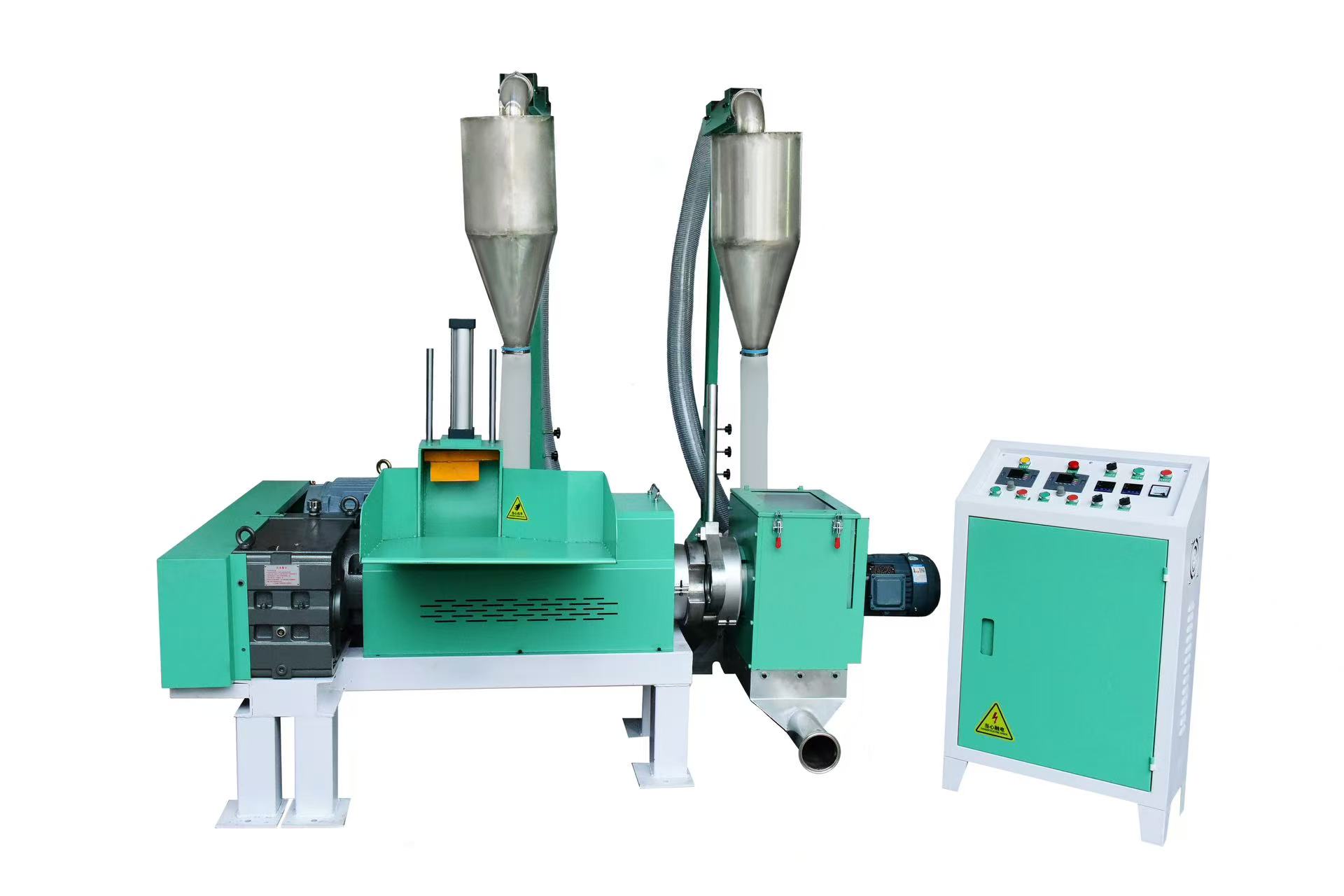
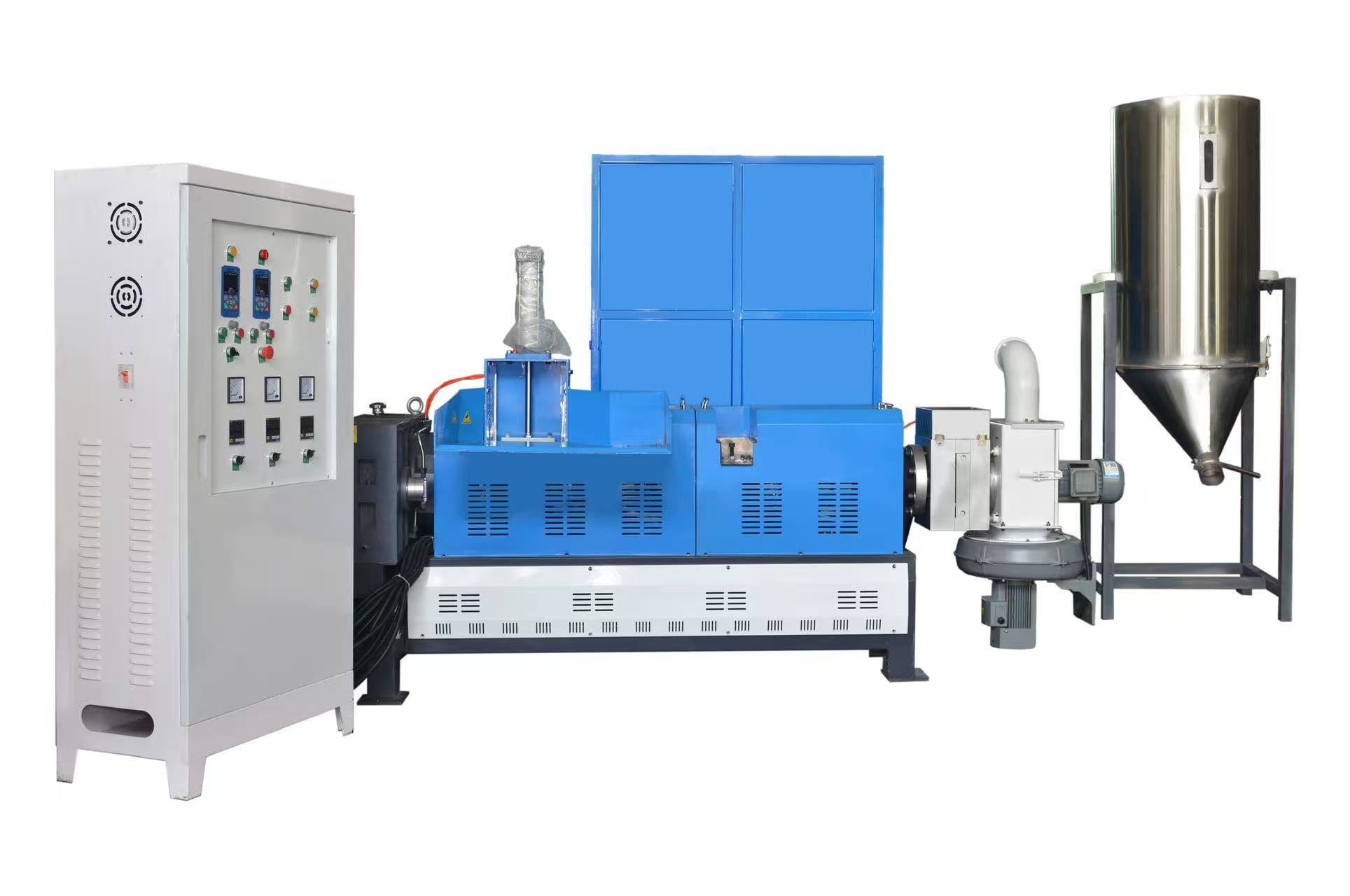
To address recycling needs for materials such as PE, PP, HDPE, and LDPE films, plastic bags, woven bags, and factory production scrap, Yangcheng Machinery’s Model 120 air-cooled plastic granulator utilizes air-cooled, water-free pelletizing technology. By combining an optimized screw design, a stable extrusion system, precise temperature control, and an intelligent control system, it offers customers a streamlined, highly efficient solution for plastic recycling and granulation.
With a designed capacity of approximately 150 kg/h, the equipment is ideally suited for plastic packaging plants, film blowing facilities, bag-making factories, plastic recycling enterprises, and clients requiring in-house scrap recycling.
I. Optimized Model 120 Screw Design for Stable Plasticization and Uniform Extrusion
The screw is a core component of the plastic granulator, directly influencing plasticization performance, extrusion stability, and the quality of the final pellets.
Yangcheng’s Model 120 air-cooled granulator features a 120mm screw. Its thread structure, compression ratio, plasticization zone, and venting configuration are specifically optimized based on the melting characteristics of various recycled plastics.
The screw can be configured according to the specific materials processed by the customer; common applicable materials include:
PE film
LDPE film
HDPE film
Plastic bag scrap
Film blowing edge trim
Bag-making waste
PP woven bags
Selected soft plastic recyclables
High-strength, wear-resistant materials and specialized heat treatment processes are employed to enhance the screw’s wear resistance and operational stability during long-term, continuous production.
Optimized Melting and Venting Structure
Given the bulky nature and high air content of plastic films, the equipment features a carefully designed plasticization zone and venting structure. This ensures the material undergoes thorough melting and effective degassing during the extrusion process.
Under optimal temperature and processing conditions, this design minimizes issues such as incomplete plasticization, unstable extrusion, and fluctuations in pellet quality.
Furthermore, by precisely controlling heating temperatures and screw speed, the system reduces thermal degradation caused by prolonged exposure to excessive heat, thereby helping to maintain consistent quality in the recycled pellets. High-Efficiency Drive System
The equipment is equipped with a high-efficiency main motor and reduction drive system, allowing operating parameters to be adjusted based on different materials and production conditions.
Actual operating current, screw speed, and output are influenced by factors such as material type, moisture content, cleanliness, feed condition, and processing techniques.
Under optimal conditions—such as with PE film—the equipment’s design capacity can reach approximately 150 kg/h.
II. Air-Cooled, Waterless Pelletizing Technology – Simplified Production Process
Traditional plastic pelletizing lines typically require water cooling troughs, water circulation systems, centrifugal dryers, or other drying equipment.
For customers seeking to reduce water usage and minimize equipment complexity, air-cooled, waterless pelletizing technology offers distinct advantages.
The Yangcheng Model 120 air-cooled plastic pelletizer utilizes a die-face hot-cutting and air-cooling conveyance method.
After being plasticized by the screw, the plastic is steadily extruded from the die head, and a high-speed rotating cutter pellets the material directly at the die face.
The hot cut pellets enter an air-cooling conveying pipeline, where they are cooled and transported by a high-speed airflow before finally entering a cyclone collector for collection.
The entire process eliminates the need for traditional water cooling troughs.
Waterless Production, Reduced Auxiliary Equipment
By utilizing air cooling, the process eliminates the need for traditional water cooling circulation systems, thereby reducing:
Cooling water consumption
Water tanks or troughs
Centrifugal drying equipment
Certain drying equipment
Wastewater treatment requirements
For factories primarily processing dry film or production scrap, this allows for further simplification of the production workflow.
Recycled Pellets Require No Water Washing
During air-cooled pelletizing, the pellets do not come into direct contact with cooling water; therefore, when processing dry materials, there is no need for post-pelletizing steps such as dewatering or centrifugal drying.
Once air-cooled, the pellets are ready for collection, packaging, or the next stage of processing.
Please note that the final pellet quality still depends on raw material cleanliness, moisture content, material formulation, and processing techniques. For waste plastics with high moisture content or heavy contamination, appropriate washing and drying treatments prior to pelletizing are still recommended. III. Intelligent Control System for Simplified Operation
The Yangcheng Model 120 air-cooled pelletizer features a centralized electrical control system. Key production parameters are consolidated on the control panel, allowing operators to monitor and adjust the equipment’s operating status in real-time.
Depending on the equipment configuration, the control system displays:
Main motor operating status
Main motor current
Inverter frequency
Heating temperatures for each zone
Overall equipment status
Fault alarm information
Multi-zone independent temperature control
The equipment employs a multi-zone temperature control method to manage the various stages of processing—from feeding and plasticizing to extrusion.
Heating zone temperatures can be customized based on the processing characteristics of PE, PP, and various film materials.
For instance, temperatures for certain PE materials can be adjusted within an optimal range to suit specific production processes.
Temperatures are not fixed; they must be adjusted on-site based on material type, color, formulation, and production speed.
Precise temperature control ensures stable plasticization and extrusion of the material.
Multiple Safety Protections
The equipment is equipped with safety features such as overload protection, fault alarms, and emergency stop functions.
The centralized control panel provides operators with an intuitive overview of machine operations, simplifying the process and enhancing daily production management efficiency.
IV. Suitable for Various Recycled Plastic Materials
The Yangcheng Model 120 air-cooled plastic pelletizer is primarily designed for soft plastics and recycled materials suitable for the air-cooled hot-die cutting process.
1. PE Film and Plastic Bag Waste
Suitable for:
LDPE film
HDPE film
Blown film edge trim
Bag-making scrap
Flat bag waste
T-shirt bag waste
Packaging film
Film waste generated during factory production
After sorting and undergoing necessary shredding and drying, these materials can be fed into the pelletizing system for recycling.
2. Agricultural and Packaging Films
Waste agricultural films, packaging films, and industrial films that have been sorted, washed, and dried can also be processed; test runs can be conducted to verify suitability based on the specific material.
3. PP Woven Bags and Related Waste
Suitable pelletizing solutions can also be selected for PP-based waste—such as PP woven bags, strapping bands, and non-woven fabrics—based on material composition and processing requirements. Different materials vary in melting temperature, fluidity, and plasticization characteristics; therefore, before purchasing equipment, we recommend that customers provide actual material samples for testing to determine the optimal screw configuration, temperature settings, and pelletizing method.
V. In-Plant Recycling—Direct Reuse of Waste Materials
For blown film plants, bag-making facilities, and plastic packaging manufacturers, significant amounts of edge trim, defective products, and scrap material are generated daily during production.
Selling this waste simply as low-value scrap not only wastes resources but also increases raw material costs for the enterprise.
The Yangcheng Model 120 Air-Cooled Pelletizer is suitable for in-plant recycling operations.
Edge trim and scrap generated during production can be processed and fed back into the pelletizer.
This creates a recycling loop:
Production → Edge Trim/Scrap → Recycling & Pelletizing → Recycled Pellets → Reprocessing
Depending on the specific production process, the recycled pellets can be reused in downstream operations such as film blowing and bag making, thereby maximizing waste utilization.
VI. Production Process of the Yangcheng Model 120 Air-Cooled Pelletizer
The overall production process is straightforward:
Step 1: Feeding
Plastic film or recycled material—having undergone sorting and, if necessary, shredding and drying—is introduced into the feeding system.
Depending on material characteristics, a forced-feeding or compaction mechanism can be configured to improve feeding stability, particularly for film-based materials.
Step 2: Heating and Plasticization
Once the material enters the Model 120 screw assembly, it undergoes compression, plasticization, and mixing driven by electric heating and screw shear forces.
A multi-zone temperature control system regulates temperatures across different sections, maintaining the material in a stable molten state.
Step 3: Extrusion and Die-Face Pelletizing
After passing through the filtration system and die head, the molten plastic is cut at the die face by high-speed rotating blades.
Pelletizing speed can be adjusted based on material properties and production requirements.
Step 4: Air-Cooled Conveying
The freshly cut, high-temperature pellets enter the air-cooling duct.
A high-speed airflow conveys the pellets while simultaneously facilitating rapid cooling, allowing them to solidify and set. Step 5: Cyclone Collection
The cooled granules enter the cyclone collection unit, where they are separated from the air before finally being discharged into collection bags.
With appropriate process adjustments, the resulting recycled granules feature relatively uniform particle sizes and smooth surfaces.
VII. Why are more customers choosing air-cooled, water-free pelletizing?
Compared to traditional water-cooled pelletizing methods, a key feature of air-cooled, water-free pelletizing is the elimination of the water-cooling stage from the production process.
For the recycling of dry films and factory scrap, this offers the following advantages:
Water savings
The production process does not rely on traditional cooling water tanks, thereby reducing cooling water consumption.
Simplified equipment configuration
There is no need for large traditional water tanks or associated dewatering systems, resulting in a more compact production line layout.
Elimination of subsequent drying steps
Since the granules do not come into direct contact with cooling water during production, the dewatering/drying stage typically required after water cooling is eliminated.
Labor savings
The equipment features centralized control; routine operations mainly involve feeding, monitoring parameters, changing bags, and conducting daily inspections.
The actual number of personnel required depends on the specific production line configuration and factory management practices.
Better alignment with eco-friendly production principles
Reduced water consumption and wastewater generation are key reasons why the air-cooled, water-free pelletizing solution is attracting increasing interest from customers.
However, specific environmental compliance requirements must still be verified based on the customer’s country, region, and local environmental regulations.
VIII. Model 120 (150 kg/h) — Suitable for small-to-medium plastic recycling and manufacturing plants
For many plastic product manufacturers, higher production capacity does not necessarily equate to a better machine.
The ideal machine should be selected based on a comprehensive assessment of:
Raw material volume + Daily operating hours + Material type + Product requirements + Investment budget
Yangcheng’s Model 120 air-cooled plastic pelletizer has a design capacity of approximately 150 kg/h, striking an excellent balance between output, equipment footprint, investment cost, and practical application. Ideally suited for:
Plastic bag manufacturers
Film blowing manufacturers
Packaging material manufacturers
Plastic recycling enterprises
PE film recycling projects
PP waste recycling projects
In-house factory scrap recycling projects
Small and medium-sized recycled plastic producers
If large quantities of PE/PP edge trim and scrap are generated daily, using a pelletizer for in-house recycling allows low-value waste to be transformed into reusable recycled pellets.
IX. Yangcheng Machinery—From Equipment Manufacturing to Material Testing
When choosing a plastic pelletizer, price shouldn’t be the only factor.
It is more important to consider:
Equipment structure, material compatibility, production stability, after-sales service, and actual trial run performance.
Yangcheng Machinery specializes in plastic recycling and processing equipment, offering air-cooled plastic pelletizers, recycling pelletizing systems, and related machinery to a diverse range of clients.
Equipment solutions can be tailored to specific raw materials and production capacity requirements.
Before finalizing the equipment, clients can provide:
Material photos + Material videos + Daily waste volume + Target output + End-product application
Technical staff will then select the appropriate equipment based on these specific conditions.
If circumstances permit, on-site material trials can be arranged to verify plasticization quality, output, and pellet characteristics.
Waste plastic is not without value.
For film blowing plants, bag manufacturers, and plastic packaging companies, the large volumes of edge trim and scrap generated daily can re-enter the production cycle if properly sorted, processed, and recycled.
The Yangcheng Model 120 air-cooled plastic pelletizer features a design capacity of approximately 150 kg/h. It utilizes an air-cooled, water-free pelletizing method combined with an optimized screw structure, multi-stage temperature control, and an intelligent control system, providing a streamlined solution for recycling PE, PP, and related plastics.
It is more than just a pelletizing machine; it is a practical tool that helps enterprises achieve:
Waste reduction → Recycling → Lower raw material costs → Higher resource utilization → Circular production If you are looking for an air-cooled plastic recycling and pelletizing machine (Model 120, with a capacity of approximately 150 kg/h), please provide us with samples of your actual material. Based on factors such as material type, moisture content, contamination level, and target output, we can recommend the most suitable equipment configuration for your needs.
Yangcheng Machinery—Turning every kilogram of waste plastic into new value, and making plastic recycling simpler, more efficient, and more eco-friendly.