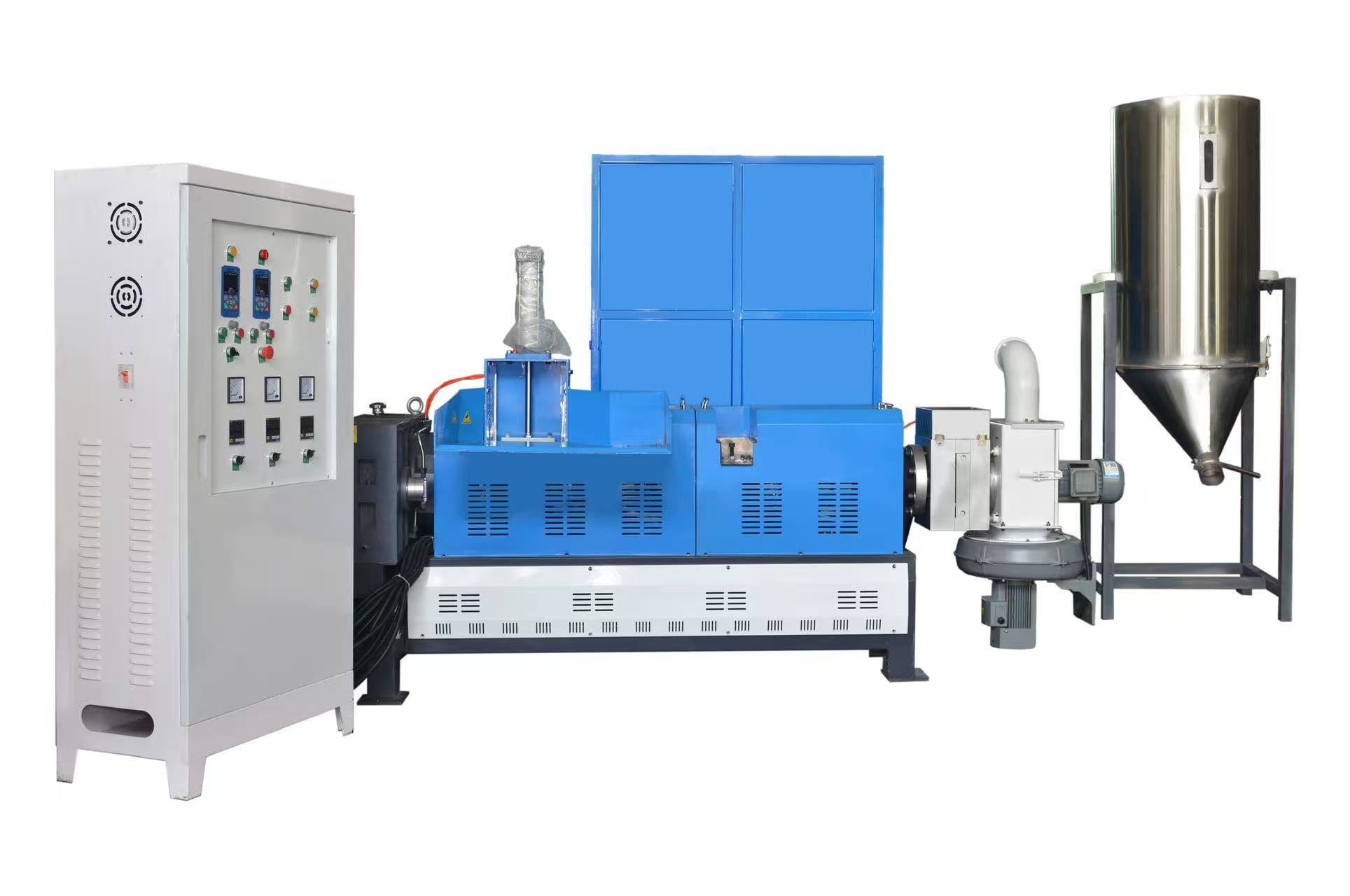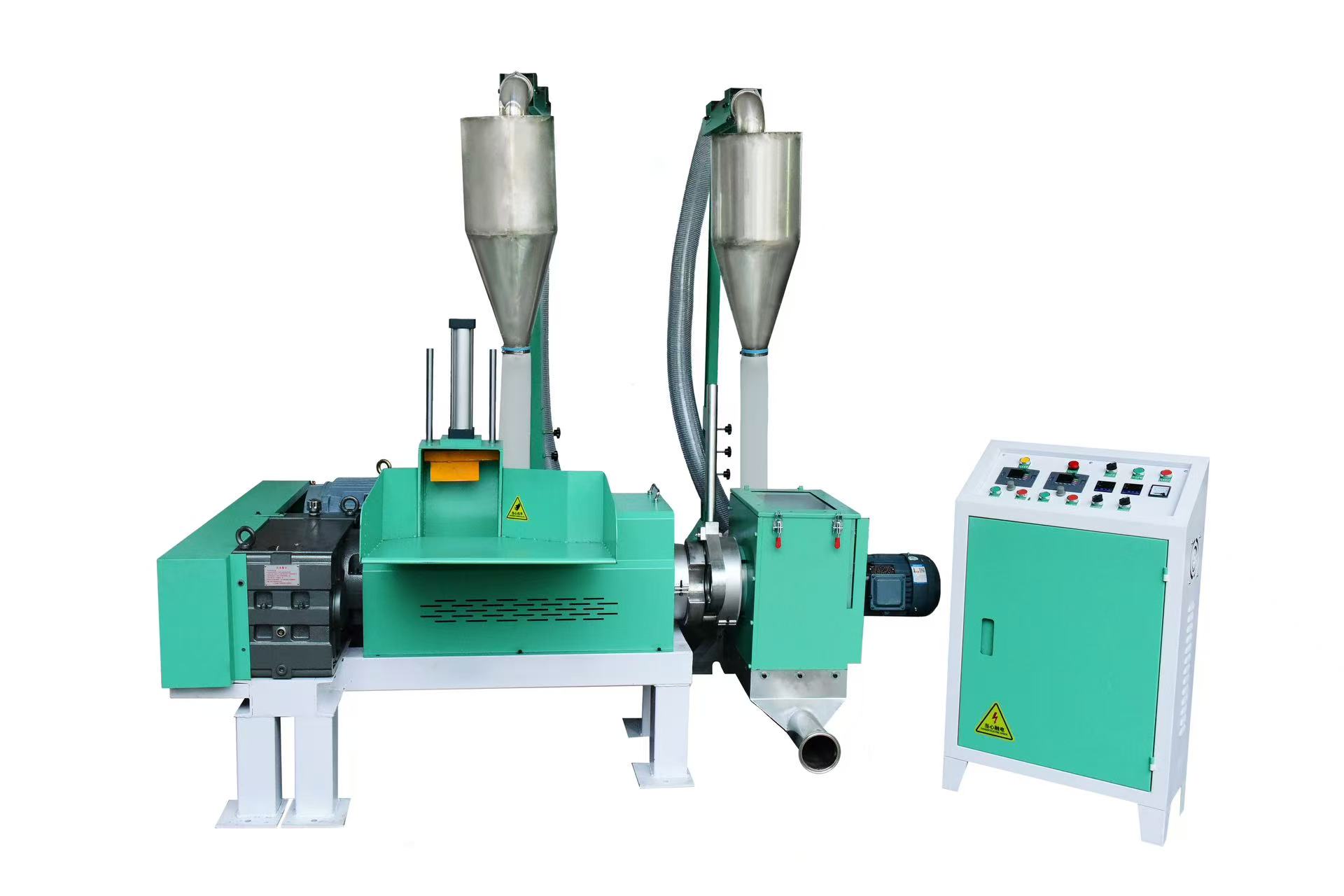
Full Record of the Model 110 Plastic Air-Cooled Pelletizer Commissioning and Testing
In the modern industrial manufacturing chain, the quality of mechanical equipment is the cornerstone that determines successful product delivery and customer satisfaction. Especially in the plastic recycling and regeneration industry, which is increasingly focused on environmental protection and resource circulation, an efficient, stable, and energy-saving pelletizer is undoubtedly key for enterprises to achieve green production and reduce costs. Today, we focus on a star product that embodies craftsmanship and technology: the Model 110 Plastic Air-Cooled Pelletizer.
This machine is a custom-built unit personally designed for a specific client. Its commissioning and testing are not just a procedural step, but a comprehensive “major examination” of the product’s design, manufacturing process, and performance. As our philosophy emphasizes: “Personal, hands-on involvement ensures greater peace of mind.” Only by going to the frontline, operating the machine personally, and witnessing every data fluctuation can we truly guarantee that every machine delivered to a client “must undergo strict and repeated testing before delivery.”
I. Hands-on Involvement: The Exclusive Guarantee for the Client’s Customization
The test run commenced punctually at 9:00 AM. The Model 110 pelletizer stood quietly in the workshop, its compact structure and streamlined design showcasing modern industrial aesthetics. It was assigned specific customization requirements; whether it was the fine-tuning of the discharge port or the optimization of the cooling system, every detail was meticulously configured to meet the client’s actual production needs.
The inspection team did not merely follow a standard operating procedure (SOP) but approached the process from the client’s perspective, scrutinizing every detail with a critical eye. The first step involved fundamental hardware checks: the tightness of bolts, the conformity of wiring connections, the lubrication status of bearings… These seemingly mundane steps are essential for ensuring the equipment’s long-term stable operation. Any looseness or defect could trigger a chain reaction during future high-load operation.
II. Empowered by Smart Technology: The Appeal of the Fully Automatic System
One of the most compelling features of the Model 110 is its integrated “Fully Automatic System.” Once preparations were complete, the operator skillfully approached the control panel. The entire startup process has been simplified to the extreme—“one-key startup and operation.” As the operator pressed the start button, the equipment immediately emitted a stable running sound, and a series of complex processes—heating, melting, extrusion, cooling, and pelletizing—unfolded systematically under the intelligent system’s coordination.
This fully automatic system goes beyond mere automation, notably demonstrating its powerful fault diagnosis and data feedback capabilities. During the test run, the system continuously monitored key parameters: extrusion pressure, melt temperature, motor speed, air-cooling temperature, etc. All data were clearly displayed on the HMI (Human-Machine Interface) in digital and graphical forms. This intuitive interface truly enables “easy and simple operation,” allowing even first-time users to grasp the essentials quickly. This significantly reduces the client’s training costs and operational complexity, which is a key reason why it has become “the favorite in the plastics industry.”
III. The Strict and Repeated “Major Exam”: Dual Verification of Performance and Environmental Standards
The core of this commissioning test was the “strict and repeated inspection” of the equipment’s performance and environmental indicators.
1. Performance Testing: After the first round of no-load operation, the inspection team introduced the pre-processed waste plastic raw material. The material was propelled by the screw into the high-temperature melting zone and finally extruded from the die head as uniform melt strands. The air-cooling system intervened quickly, efficiently solidifying the melt. The cutting knives precisely cut the plastic strands into pellets, with uniform and full-bodied granules continuously being produced.