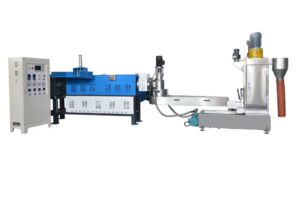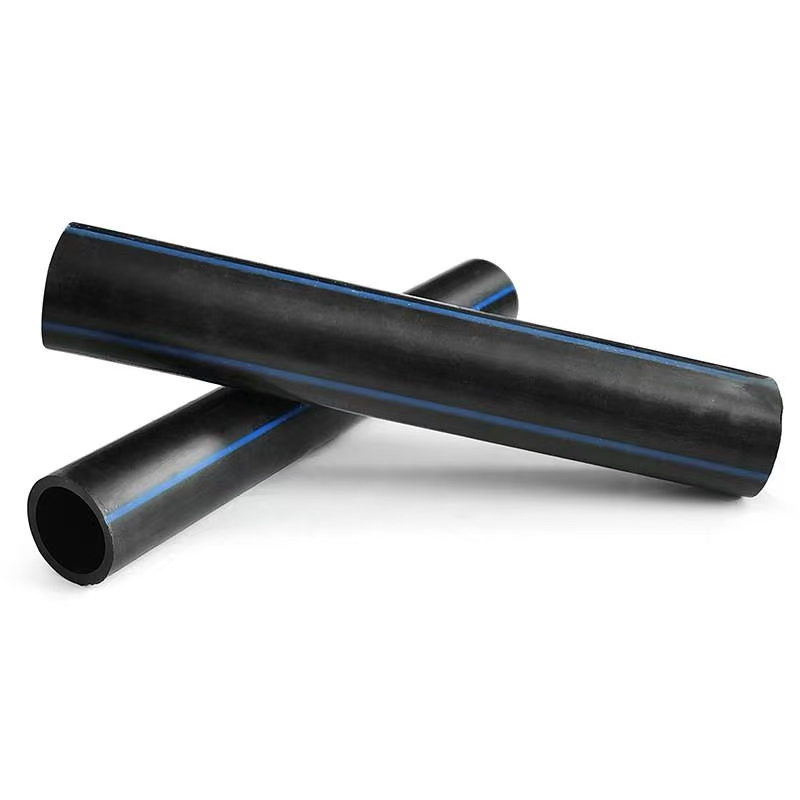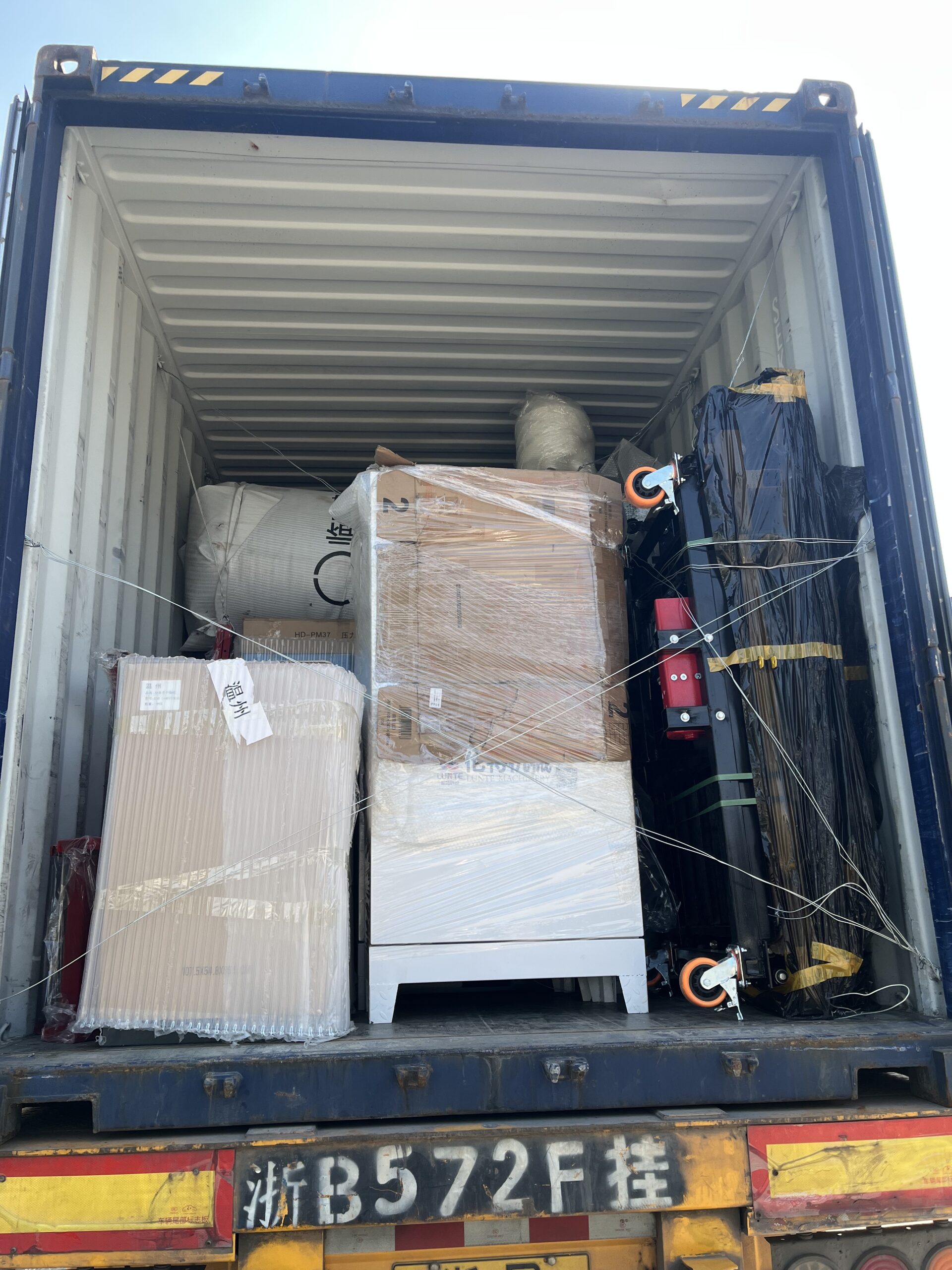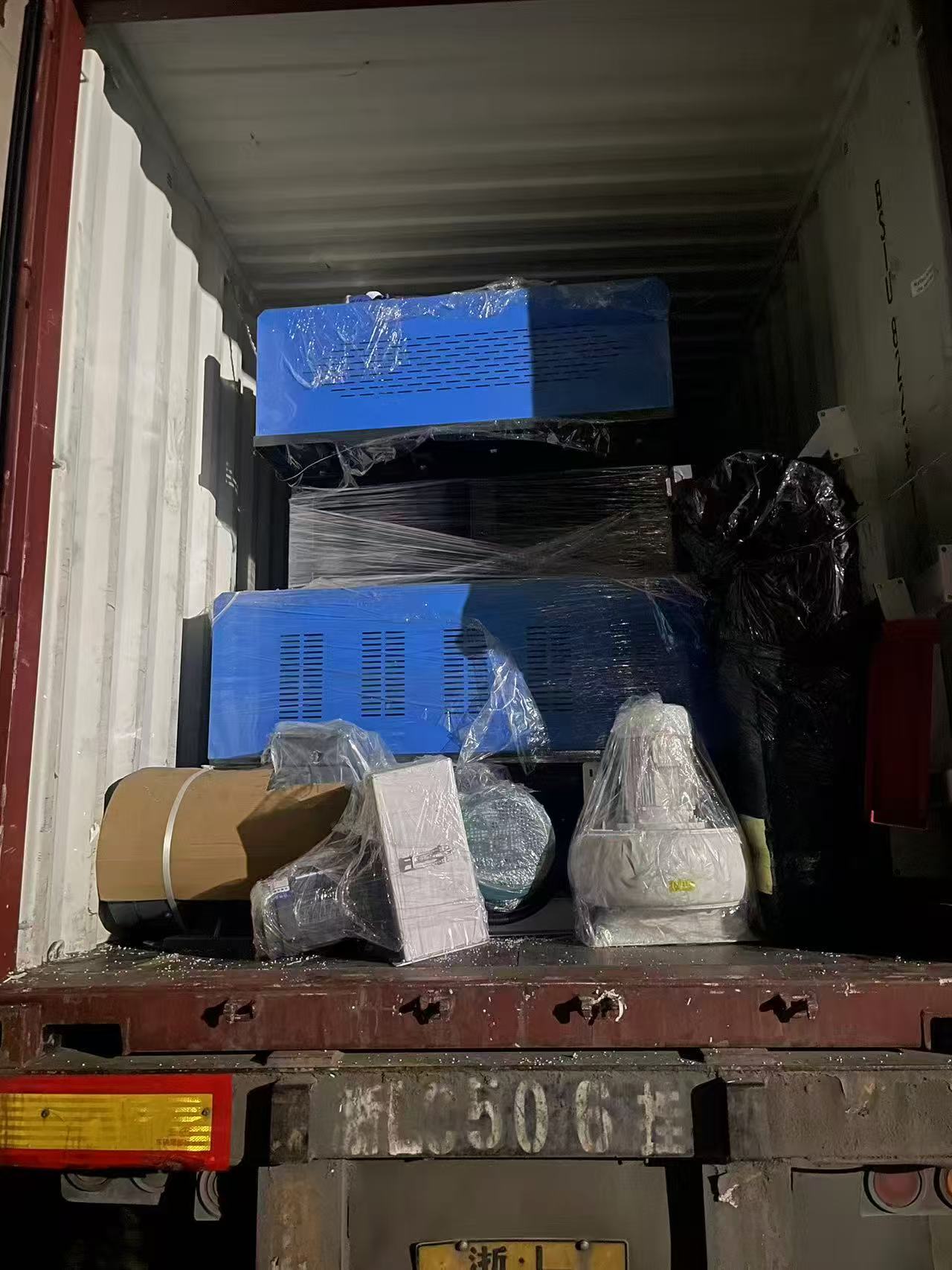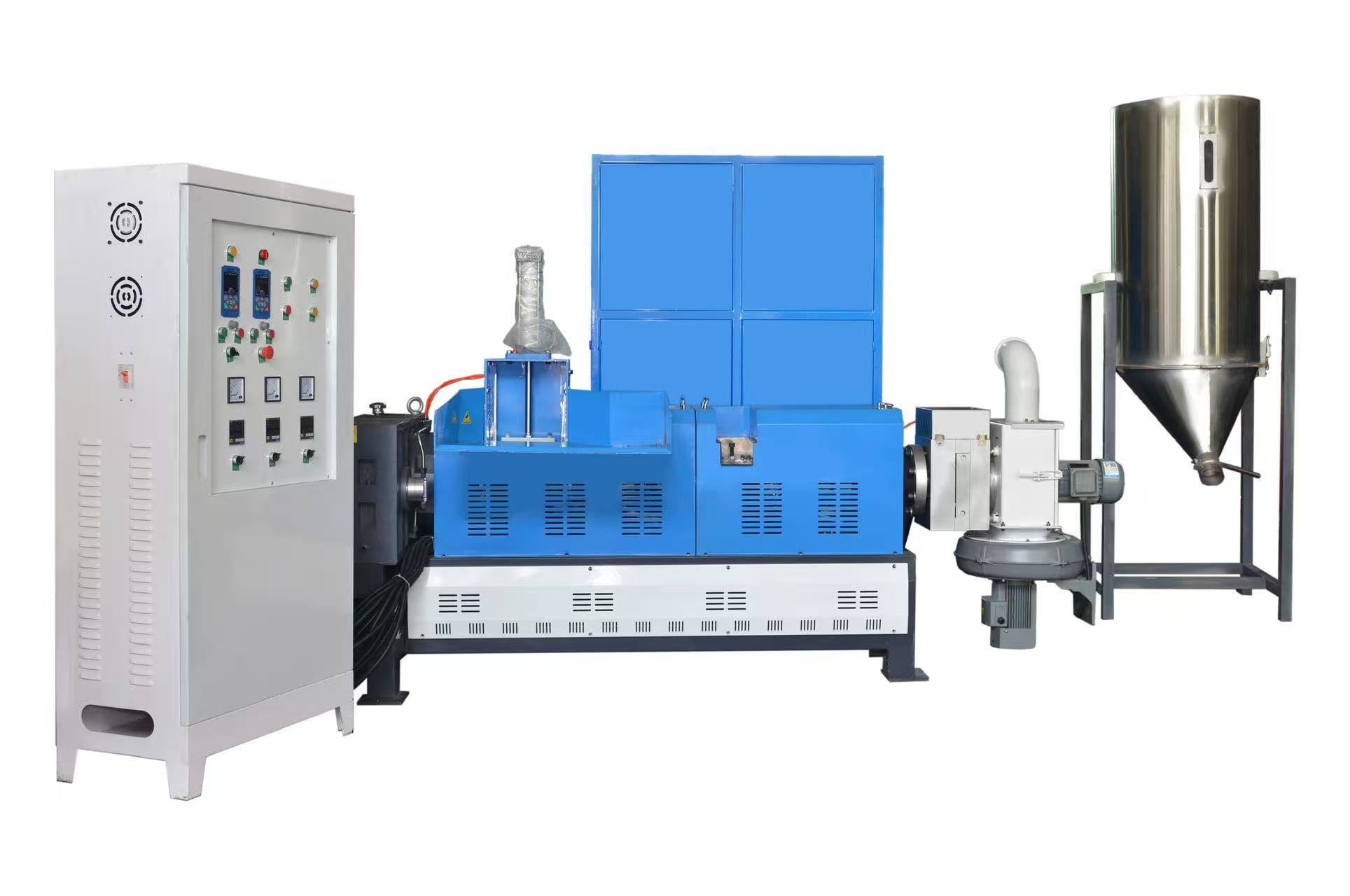
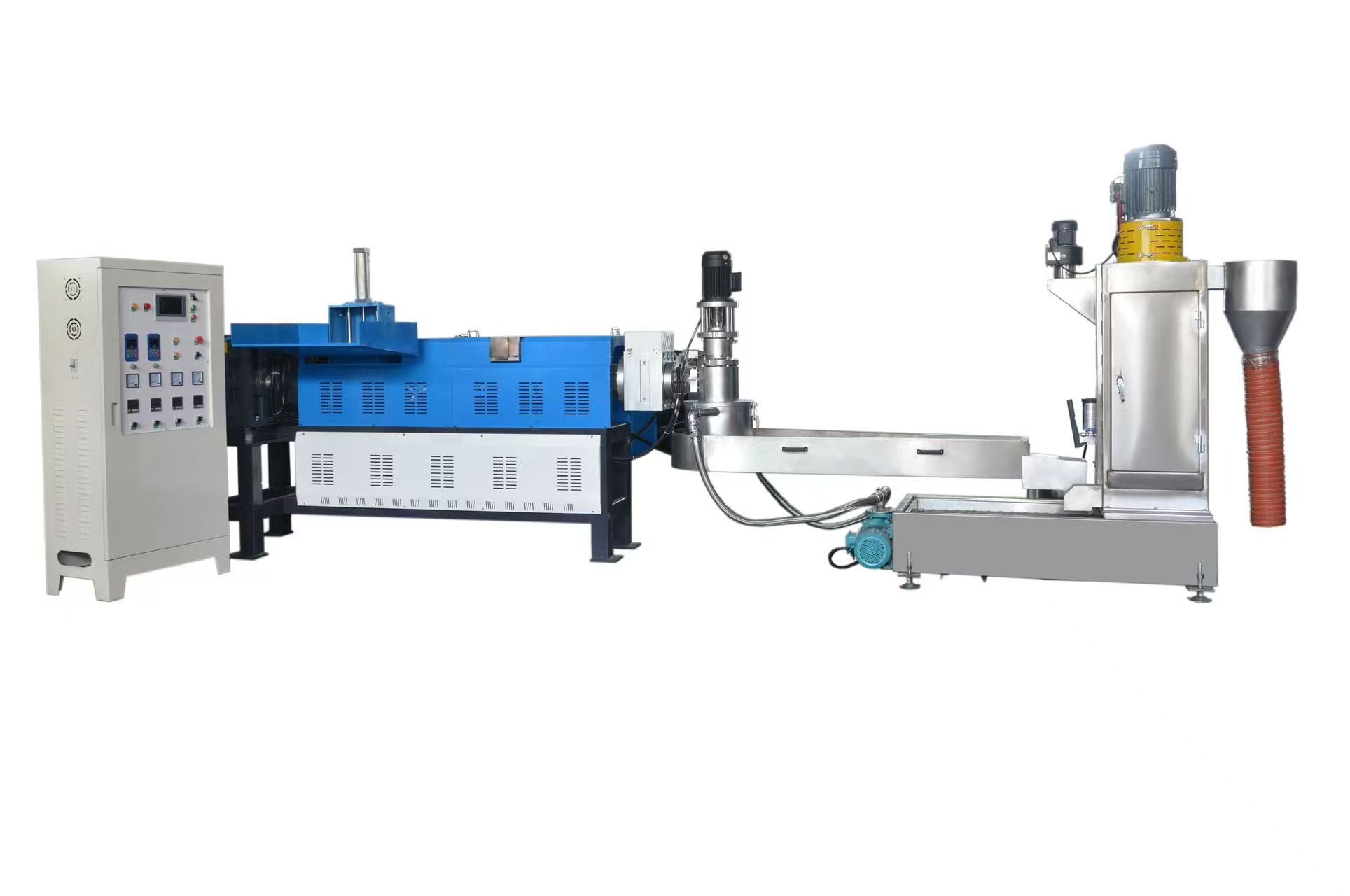
A Perfect Blend of Environmental Responsibility and Efficiency: Successful Trial Run of the Model 150 Streamlined PP Water-Ring Pelletizer. Against the backdrop of a global push for the circular economy and sustainable development, the recycling and reuse of waste plastics have evolved from mere “environmental slogans” into a “sunrise industry” with immense commercial potential. As a core component of the plastic recycling process, the performance of pelletizing equipment directly determines the quality of recycled plastic granules and the profitability of the manufacturing enterprise. Recently, the highly anticipated Model 150 streamlined plastic water-ring pelletizer was completed in the workshop and successfully passed rigorous trial inspections.
Tailor-made for PP (polypropylene) materials, this powerful recycling tool has impressed the market with a stable output of 350 kg per hour and a design that is both minimalist and highly efficient. This article provides a comprehensive analysis of the Model 150 pelletizer’s technical highlights, its performance during trials, and its significant value in the field of PP plastic recycling. In traditional plastic machinery manufacturing, there is often a misconception that “complexity equals sophistication.” However, for the vast number of small and medium-sized recycling enterprises, overly complex equipment entails not only high procurement costs but also cumbersome maintenance and steep operational learning curves.
The Model 150 pelletizer takes a different approach, championing a design philosophy of “simplicity without compromising capability”:
The “Golden Ratio” of the Model 150: The designation “150” typically refers to an extruder screw diameter of 150 millimeters. This size represents the “sweet spot” for balancing production capacity with energy consumption; it ensures sufficient material throughput without the excessive power consumption associated with ultra-large-scale equipment.
Streamlined Design: The “streamlined” (or minimalist) nature of this machine means that flashy, redundant features have been stripped away, refocusing engineering efforts on the core essentials of pelletizing: plasticization and cutting. By optimizing the mechanical drive structure, simplifying the control panel, and adopting a modular design, the machine significantly lowers the learning curve for operators. Even novices with limited experience can become proficient after only a short training period. Precise Production Capacity (350 kg/h): An actual output of 350 kg per hour is an ideal figure for recycling waste PP products. This translates to a stable daily output (based on a 20-hour workday) of approximately 7 tons of high-quality recycled pellets, perfectly meeting the daily processing requirements of medium-sized recycling plants. PP (polypropylene) is one of the most common plastics in daily life, widely used in woven bags, packaging boxes, automotive parts, and home appliance housings. However, PP exhibits high fluidity in its molten state; traditional “strand pelletizing” (cold cutting) methods often lead to issues like strand breakage and sticking, while the strand-pulling process requires a long manual traction distance and occupies significant floor space.
This Model 150 pelletizer employs advanced water-ring hot die-face cutting technology, effectively overcoming the common challenges associated with PP recycling:
Hot Die-Face Cutting for Uniform, Full Pellets: As the plastic melt is extruded from the multi-hole die head, high-speed rotating cutters flush against the die face instantly sever the strands. Since the plastic remains in a high-temperature molten state, surface tension causes the cut pellets to naturally contract into uniform, full cylindrical or spherical shapes, resulting in superior visual quality and market appeal.
Water-Ring Cooling to Prevent Sticking: Upon cutting, centrifugal force instantly propels the pellets into a high-speed water ring. The water flow not only dissipates heat—achieving rapid quenching—but also serves to transport the material. The water-pellet mixture then enters a centrifugal dewatering unit for solid-liquid separation. This process completely eliminates the problem of PP pellets sticking together.
Compact Structure for Space Efficiency: Unlike strand-cooling water troughs that can span over ten meters, the water-ring pelletizing head and dewatering equipment are highly integrated, significantly reducing the factory floor space required—a key example of its streamlined design. Temperature Control System and Plasticization Performance:
While the melting point of PP typically ranges from 160°C to 170°C, achieving optimal plasticization requires precise, staged temperature control across the various zones of the extruder. During the trial run, the equipment’s intelligent temperature control instruments demonstrated exceptional sensitivity. Upon feeding in the crushed and washed waste PP film and rigid scrap, the 150mm screw’s powerful shearing and kneading capabilities caused the material to melt rapidly within the barrel. The extruded melt was uniform, free of bubbles and unmelted particles, attesting to the excellence of the screw design.
2. Coordination between die head pressure and the pelletizing system
As the molten PP plastic passed through the screen changer into the water-ring die head, system pressure remained stable. The speed of the cutter motor was perfectly synchronized with the extruder’s output rate. Operators could easily control pellet size by making fine adjustments to the cutter speed. At the discharge outlet, accompanied by the crisp sound of dewatering, a steady stream of recycled PP pellets emerged—uniform in size, smooth-surfaced, and free of “tails.”
3. Production capacity and energy consumption assessment
Under continuous feeding conditions, technicians weighed the output and timed the process. Data showed that during stable operation, the actual output consistently reached 350 kg per hour, fully meeting—and even slightly exceeding—design specifications. Furthermore, thanks to improved transmission efficiency from the streamlined design and the use of high-efficiency heating bands, the energy consumption per ton of material processed was far below the industry average.
All moving parts operated smoothly without abnormal noise; the subsystems—including temperature control, hydraulic screen changing, water-ring pelletizing, and centrifugal dewatering—worked in perfect harmony. The resulting PP pellets featured pure color and high density, marking the trial run a complete success. Plastic pollution is a major environmental challenge facing humanity in the 21st century. Discarded items such as PP takeout containers, old plastic basins, and waste piping can persist in the natural environment for centuries if not properly handled.
The Model 150 streamlined PP water-ring pelletizing machine was created specifically to bridge the “last mile” in the rebirth of waste plastics. Through physical recycling and pelletization, we transform what was once worthless “urban waste” into high-quality industrial raw materials suitable for injection molding and extrusion. This not only reduces reliance on virgin petroleum resources but also significantly lowers carbon emissions. This machine also prioritizes environmental protection during operation: the water-ring system utilizes an internal circulation design that allows cooling water to be reused after passing through a filter, resulting in significant water savings; additionally, the optimized exhaust system ensures good air quality in the production workshop, truly realizing green manufacturing.